

- What is SEO in the Travel Industry?
- Why SEO Is Critical for Travel Agencies to Stay Competitive
- How Do Travelers Search Online?
- Google Ranking Factors in SEO for Travel Agencies
- The Fundamentals of Travel SEO to Boost Website Traffic
- Common SEO Challenges for Travel Agencies and How to Overcome Them
- How to Track and Measure Your SEO Efforts for Maximum ROI
- How Long Does It Take to See Results from Travel SEO?
- Start Reaching More Travelers with a Strong SEO Strategy!
Does your travel agency offer some of the best experiences and destinations, yet your website isn’t attracting the traffic you’d expect?
If this sounds familiar, you’re not alone. Many travel businesses face the challenge of not reaching their potential clients online. But don’t worry, we know what it takes to change this.
In this guide, our experts at Nativo will walk you through the essentials of travel SEO. We’ll explain how search engines work, how to boost rankings, common challenges, and how to measure your efforts effectively. By the end, you’ll understand how to implement travel SEO to grow your business.
What is SEO in the Travel Industry?
Search engine optimization (SEO) is a search marketing strategy that relies on organic (non-paid) efforts to help websites become more visible on search engine results pages (SERPs).
Specifically, SEO for the travel industry is a strategy to get websites or travel businesses such as hotels, tour operators, travel agencies to show up higher on search results when travelers search for destinations, activities, or travel services that match yours.
Why SEO Is Critical for Travel Agencies to Stay Competitive
In the travel industry, standing out online is essential to attracting more travelers. A website’s SEO helps it rank higher in organic search, making it easier for potential clients to find you. That said, without a strong SEO presence, your travel agency could get lost among competitors offering similar services.
A successful SEO strategy can:
- Boost your website’s visibility. When your website ranks higher, it’s easier for travelers to find you.
- Drive more organic traffic and attract travelers who are actively searching without relying on paid ads.
- Enjoy increased bookings thanks to the increased visibility and traffic.
- Build credibility and trust, improving your agency’s reputation and authority.
- Give you constant results without continuous ad spend.
How Do Travelers Search Online?
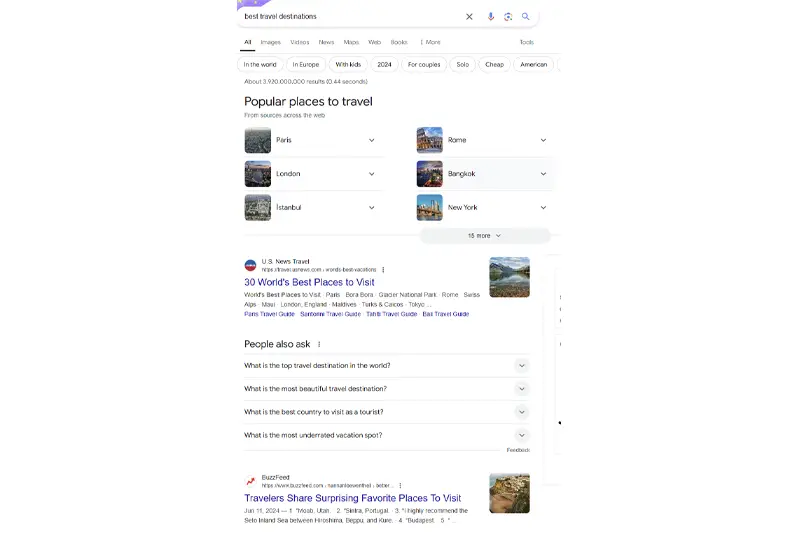
When planning a trip, travelers typically begin their journey by searching online, often using Google to find inspiration, compare options, and make decisions. They might start with broad search terms like “best travel destinations” or “top places to visit in Costa Rica,” researching destinations.
As their plans take shape, they often shift to specific queries, such as “family-friendly beach resorts” or “affordable guided tours in Costa Rica,” and then move on to comparing providers, checking reviews, and even looking up local attractions.
As you can see, this pattern, from broad searches to more detailed ones, shows a path through every stage of the buyer’s journey. That’s why, creating or adjusting your SEO strategy to match their search behavior allows you to connect with travelers at each stage of their journey. This makes it easy for them to find your service.
Google Ranking Factors in SEO for Travel Agencies
To make your agency stand out online among other travel websites it’s essential to understand how search engines like Google determine which websites rank higher. Why? Because there are many factors that influence how your travel website performs in search results. Let’s take a look at a few of them!
Experience, Expertise, Authority, and Trustworthiness (E-E-A-T)
E-E-A-T stands for Experience, Expertise, Authority, and Trustworthiness, a set of guidelines Google uses to judge content quality. Google’s system prefers websites that provide accurate and reliable information to benefit users, not just to rank higher in search results.
By focusing on E-E-A-T, you can build trust with travelers by providing clear information, helpful guides, and honest reviews. In fact, Google says that trust is the most significant. Make sure that your content truly showcases your expertise in your industry. If possible, highlight the fact that it was written by an expert in the field.
User intent
User intent refers to what a person expects to find when typing a search query, and it’s a crucial factor in Google’s ranking system.
For example, the search intent of someone searching for “family-friendly beach destinations” is meant for safe, fun activities for children, while someone searching for “luxury beach resorts for couples” wants a romantic and high-end experience.
Keyword optimization
Keyword optimization refers to the strategic use of relevant keywords and phrases throughout your content so Google understands what your website is about. The right keywords make it easier for travelers to find you and also help Google categorize your content for relevant searches.
Content freshness and updates
Content freshness refers to how recently your content was updated and relevant, which is highly relevant for improving your ranking rate in Google and other search engines.
Particularly, Google refined its core ranking systems early this year to determine which web pages are unhelpful, have a poor user experience, or feel like they were built for search engines instead of people.
The moral of this is that you should update old articles to increase your Google ranking, whether it’s adding relevant statistics, optimizing keywords, or adding additional content.
CTA: Boost Your Travel Agency’s Google Rankings!
Make your agency stand out and attract more travelers with our SEO services for travel businesses.
The Fundamentals of Travel SEO to Boost Website Traffic
As mentioned before, understanding the basics of travel SEO is essential to driving more traffic to your website. Right now, we’re about to explore the elements that every travel business should focus on to improve search rankings and visibility. So grab a pencil and notebook and take some notes!
Keyword research
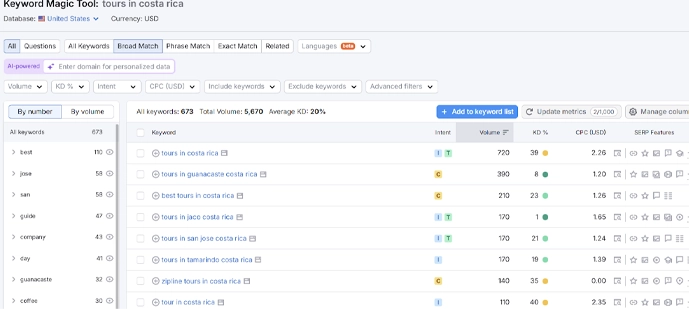
Keyword research is the foundation of a successful SEO strategy. It involves discovering the words and phrases that travelers use when searching for destinations, tours, accommodations, or travel tips. In this field, it’s essential to focus on broad topics that capture general interest and niche keywords that target specific searches.
When performing keyword research, there are a couple of things to keep in mind, including:
Target topics, not keywords
Targeting topics means creating content that covers a broad subject comprehensively rather than focusing on individual keywords.
Using this approach will allow you to build topical authority around a specific subject matter, which will help you gain attention, present yourself as an expert, and maximize your ranking.
To effectively target topics, you can do the following:
- Choose topics relevant to your audience.
- Create content clusters that explore subtopics.
- Focus on delivering value that answers multiple questions within a subject.
Understanding keyword intent
Understanding keyword intent is crucial in travel SEO because it helps you connect with users at different stages of their journey, increasing the potential for engagement and conversion. In fact, as Forbes highlighted, search intent was one of the most important ranking factors in 2023, alongside quality content and backlinks.
Search intent can be categorized into three types:
- Informational: Informational intent is when users look for general information or answers to questions, such as researching destinations or gathering travel tips.
- Navigational: Navigational intent is when users already have a specific destination or brand in mind, and they want to find it online.
- Transactional: Transactional intent is when users are ready to make a decision, like booking a hotel or reserving a tour.
Importance of long-tail keywords
Long-tail keywords are essential to also match specific search intents. These keywords are longer, more specific phrases that often capture users with clear goals or further along in decision-making.
Also, using them allows you to target niche markets and address specific needs, bringing in high-quality traffic that’s more likely to convert.
Some examples of long tail keywords can be:
- “Eco-friendly family resorts with activities for kids”
- “Best guided hiking tours in Costa Rica for beginners”
- “Affordable boutique hotels with ocean views in Costa Rica”
- “Luxury honeymoon packages for couples in Costa Rica”
- “Top-rated wildlife safari tours for photographers in Costa Rica”
On-Page SEO for travel agencies
On-page SEO involves optimizing each page of your website to make it more accessible to search engines and more engaging for users. For travel websites, on-page SEO is essential, as it helps travelers easily find information on destinations, compare hotels, and choose tour operators.
Let’s explore the key aspects of on-page SEO that will make your travel site stand out:
Meta titles, descriptions, headers, and images
Meta titles, descriptions, headers, and images are crucial in SEO for two reasons: they help search engines understand what your page is about, and they also provide a clear, concise preview of your content to potential visitors.
Here’s what you should keep in mind about each one of them:
| Element | Description | Role in SEO rankings | Best practice |
| Meta titles | Clickable headlines on search engine results pages (SERPs). | They are the first thing a user sees, crucial for increasing visibility and attracting clicks. | Keep titles between 55-60 characters, include target keywords, and make them engaging. |
| Meta descriptions | Brief summaries below the meta title in search results. | They give users a sneak peek of your content, influencing their decision to visit your site. | Keep descriptions between 150-155 characters, use a target keyword, and a call-to-action. |
| Headers | Headers (like H1, H2, and H3) help structure your content, making it easier for users and search engines to understand. | They organize your content, improving readability and helping search engines understand the page’s hierarchy. | Start with one H1, use H2s for main sections, and H3s for subtopics to create a logical flow. |
| Images | Images enhance your page visually and impact SEO. | When optimized, they collaborate with fast page load times. Also, by adding alt text to them, you improve your visibility in image search results. | Compress images for faster loading, use clear visuals, and write descriptive alt text with keywords. |
Want to Optimize Your Travel Site with Expert SEO Insights? Get in Touch with Us Today!
Internal linking
Internal linking connects pages within your website, guiding users to related content and helping search engines understand your site’s structure. For example, linking a “Costa Rica adventure tours” page to a blog on “Top Things to Do in Costa Rica” keeps visitors engaged and highlights key pages for search engines.
To apply internal links effectively, consider the following:
- Use descriptive anchor text: Use keywords or phrases that clearly describe the linked content. For example, instead of using “click here,” use “explore our Costa Rica travel guide.”
- Keep links relevant: Make sure the linked pages are relevant to the current content. This keeps users engaged and enhances the overall user experience.
- Avoid overloading links: Don’t stuff too many links into one page. Focus on quality over quantity, linking only where it makes sense.
User-friendly page and navigation
Creating a user-friendly website is essential for SEO and user experience. Poor navigation can lead to high bounce rates and lower rankings, while a well-structured site keeps visitors engaged and boosts search engine rankings.
Good navigation also helps search engines crawl and index your pages, making it easier for users to find what they need and explore your content.
Some best practices to consider for a user-friendly travel website are:
- Minimize intrusive pop-ups, especially on mobile devices, as they can frustrate users and cause them to leave your site.
- Use a font size of at least 16px and ensure a high contrast between text and background for better readability.
- Optimize images, enable browser caching, and use a content delivery network (CDN) to improve page speed.
- Use clean, descriptive URLs that are easy to understand, like “/costa-rica-adventure-tours” instead of “/page12345.”
Rich snippets
Google’s rich snippets display additional information about your site directly on the results page, such as star ratings, prices, event dates, or images. Search Engine Journal reports that 81.95% of these snippets are paragraphs, while 10.77% are lists.
To increase your chances of earning rich snippets, you can:
- Add schema markup with formats like JSON-LD or microdata. Google supports various types, such as “Hotel,” “Tourist Attraction,” or “Event,” which highlight details specific to travel sites.
- Make sure your content is accurate and thorough to help Google understand the topic.
- Add customer reviews or testimonials to make your site eligible for star ratings in search results. Use the “Review” schema to include this information.
- If you offer tours or hotel stays, use structured data to display prices, availability, and booking options.
Call-to-actions
CTAs guide users to take the next step, like booking a tour, downloading a guide, or signing up for a newsletter. Place them strategically where visitors are ready to act, such as within blog posts, in sidebars, or on booking pages.
Some of the most common CTAs are:
- “Book Your Adventure Now”
- “Check Availability”
- “Join Our Newsletter”
- “Get Exclusive Offers”
- “Explore Our Packages”
- “Schedule a Call”
- “Download Our Free Travel Guide”
- “Get Your Itinerary”
Structured data
Structured data, or schema markup, is code added to your website to help search engines understand your content better. While it’s not a ranking signal, structured data can improve click-through rates by allowing search engines to display your information in a more detailed way.
To make the most of structured data:
- Choose the right schema type: Use schema types that match your content, like “hotel,” “tourist attraction,” “event,” or “review,” to help search engines categorize it accurately.
- Use JSON-LD code: Google recommends the JSON-LD format for adding structured data. Insert this code directly into your page’s HTML.
- Keep data accurate and up-to-date: Ensure that all information is correct and current, as outdated data can impact credibility.
- Validate with Google’s tools: Use Google’s Rich Results Test to check for errors and confirm your markup is eligible for rich snippets.
Local SEO to dominate local searches
Local SEO optimizes your business’s online presence to rank for location-based searches. It ensures that when people search for services “near them” or in specific areas, local businesses like yours appear in the results. This is especially valuable for helping travelers find your services at their destination.
Here are a few techniques you can incorporate into your SEO strategy:
Google Business Profile and maps optimization
A Google Business Profile (GBP) is a free tool to manage how your business appears on Google Search and Maps. An optimized profile improves your visibility in local searches, builds trust, and encourages travelers to choose your services.
Check out these steps to optimize your Google Business profile:
- Claim your Google Business Profile if you haven’t already, and complete the verification process.
- Include accurate contact details and the services you offer.
- Add a detailed description with keywords related to your location and services.
- Use high quality photos of your business, destinations, or services to make your profile stand out.
- Update your hours regularly, especially during holidays or seasonal changes, so travelers know when you’re available.
- Encourage reviews by asking clients to leave feedback.
Location-focused pages and content
Location-focused pages are dedicated pages on your website that target specific areas where your services are offered. These pages are crucial for local SEO because they allow your business to rank for local keywords that align with travelers’ searches.
For example, when people look up “guided tours in Costa Rica” or “top hotels in Costa Rica,” a well-optimized location-focused page can help your agency appear in those search results, making it easier for travelers to find you.
To create effective location-focused pages, consider the following:
- Use location-based keywords naturally to make each page more relevant and improve its ranking potential.
- Avoid reusing the same text across different location pages.
- Include images of each location as well as feature reviews to build trust and make the page more engaging.
- Structure your URLs to reflect both location and service, like “/tours/costa-rica” or “/guided-tours/costa-rica,” making it clear to both users and search engines what the page is about.
Online reputation management
Online reputation management is all about keeping a positive image of your travel agency online. For local SEO, having good reviews and high ratings can make a big difference, helping you rank better and attracting more travelers.
Actually, 75% of people read online reviews for local businesses according to BrightLocal. This is because engaging with customer feedback shows you care about their experiences and builds trust.
To manage your online reputation, follow these tips:
- Ask satisfied customers to leave a review on Google, Yelp, or TripAdvisor. Positive reviews can boost your ranking and draw in more clients.
- Thank customers for the positive reviews and address negative ones professionally. This shows you’re listening and builds credibility.
- Keep an eye on reviews and ratings across platforms. You can use tools like Google Alerts to stay updated whenever someone mentions your business online.
NAP consistency in online citations
NAP stands for Name, Address, and Phone number, and keeping these details consistent across the web is essential for local SEO. Search engines, check for consistency in your business’s NAP information to ensure accuracy when displaying your business in search results.
As a result, when your NAP details are consistent, it can boost your visibility in local search rankings.
Here’s what you can do to achieve consistency:
- Make sure your NAP details are the same on your website, Google Business Profile, social media, and local directories.
- Even small changes (like “Street” vs. “St.”) can create inconsistencies, so keep the format identical.
- If your business moves or you get a new phone number, update it across all platforms to keep everything accurate.
Technical SEO
Technical SEO focuses on optimizing the backend elements of your website that help search engines crawl, understand, and rank your content. Having a good technical SEO strategy is crucial, as it ensures that your website performs well, provides a positive user experience, and is easily discoverable by search engines.
You should consider the following factors when optimizing your site’s technical SEO:
Clear website structure and indexing
A well-organized website structure helps search engines understand how your content is arranged, making it easier to crawl and index relevant pages.
For this aspect of technical SEO, you should organize pages logically, with main categories and subcategories, such as destinations, tours, or travel tips. This will allow search engines and users to find relevant information quickly.
Also, submit an XML sitemap through Google Search Console to ensure all key pages are indexed. Indexing ensures that these pages are added to search engines’ databases and eligible to appear in search results.
Make sure to link to relevant pages internally to improve accessibility and avoid orphan pages. These are pages on a website that have no internal links pointing to them, meaning they’re not connected to the main structure of the site.
Page speed and mobile-friendliness
Page speed and mobile-friendliness are crucial elements of technical SEO that directly impact user experience and search rankings.
Why? Fast-loading pages keep website visitors engaged and reduce bounce rates. With 5.44 billion unique mobile phone users worldwide (We Are Social), mobile-friendliness is crucial to meeting users’ preferences as more people browse on their phones.
Putting it in simple words, your content will be easier for travelers to access and engage with on any device by improving your page speed and mobile-friendliness.
Check out some excellent ways to improve them:
- Use compressed and optimized image formats (like WebP or JPEG) to reduce load times without sacrificing quality. Avoid large image files that slow down mobile loading.
- Enable browsing caching. Caching allows frequently accessed resources to load faster on repeat visits, improving speed for returning users.
- Make sure your site is responsive to fit any screen size, from desktops to smartphones.
- Remove any unnecessary JavaScript and CSS code from your site to speed up loading.
Use tools like Google’s PageSpeed Insights or GTmetrix to regularly evaluate your page speed and mobile compatibility.
Fixing common SEO issues
Fixing common SEO issues is essential for keeping your site healthy, user-friendly, and competitive in search rankings. Keeping these problems in check ensures that both users and search engines can access your content smoothly, resulting in higher rankings and engagement.
Here are a few aspects to consider:
- Broken links can frustrate users and impact your rankings. Regularly scan your site using tools like Google Search Console or Screaming Frog to identify broken links. Replace them with working URLs or relevant redirects.
- Duplicate content confuses search engines and affects rankings. Identify duplicates using tools like Siteliner or Copyscape. Resolve them by merging pages, rewriting content, or adding canonical tags to specify the primary page.
- Alt texts and file names improve SEO and make your site more accessible. Ensure that every image has descriptive, relevant alt text and file name that explains what the image shows. For example, “Sunset at Santorini beach” instead of “IMG1234.jpg.”
- Crawling errors prevent search engines from accessing your pages. Regularly check Google Search Console for errors like “404 Not Found” or “Server Errors,” and address these issues by fixing the pages or updating your sitemap.
Link Building for travel agencies
Link building is a powerful SEO strategy. The goal of link-building is to generate more backlinks to your website, which then helps improve the page’s authority and trustworthiness. In fact, top-ranked search results generally have 3.8 times more backlinks than lower-ranked results, according to Forbes.
If you would like to improve your rankings over competitors who aren’t using this approach and get relevant referral traffic, consider the following:
Partner with local travel businesses
Building partnerships with local travel businesses like hotels, tour operators, and travel blogs can be an excellent way to gain high-quality backlinks. Having these businesses link to your site gives you credibility with search engines and helps you reach more potential clients.
To do so, follow these steps:
- Offer to exchange links in a mutually beneficial way, such as recommending each other’s services on relevant pages.
- Develop shared content, like destination guides or joint blog posts, that both businesses can promote and link to.
- Add your partner’s business to a “Recommended Partners” or “Resources” page on your site, and ask them to do the same.
Do guest posting
Guest posting involves writing and publishing articles on other websites in your industry, allowing you to share your expertise with a wider audience while earning a backlink to your site. Also, it can help you connect with readers already interested in travel, providing new exposure for your business.
To get the most out of guest posting, follow these steps:
- Look for well-established travel blogs or niche sites that match your target audience.
- Focus on topics that interest the host site’s readers. Valuable content builds trust with a new audience and strengthens your website’s authority.
- Link naturally to pages on your site where it feels natural, such as a link to a related blog post or service page.
Social Media for Travel SEO
An effective social media strategy keeps your agency visible to travelers while strengthening your online presence. How? Simple! Social platforms also help build authority and trust, which indirectly supports your rankings in search engines.
Check out some ideas for using social media in your travel SEO strategies:
Promote content on social media platforms
If you’re creating blog posts, destination guides, or travel tips for your website, consider sharing them on social media to expand your reach. Promoting content across platforms like Instagram or Facebook helps bring in more traffic, keeping your travel agency top-of-mind for potential travelers.
To get the most out of promoting your content, think about these ideas:
- Different platforms attract different types of audience and support various content formats. Use the ones that best fit the kind of content you’re sharing.
- Regularly sharing content keeps your agency visible and helps followers know when to expect updated posts. A steady schedule also signals that your brand is active and engaged.
- Travel content shines with strong visuals. Use high-quality photos, videos, or infographics to grab attention.
- Respond to comments, ask questions, and encourage travelers to share their experiences.
- Include links to your website in your content. You always want to redirect potential customers to your site.
Optimize social media profiles for SEO
Optimizing your social media profiles with relevant keywords and consistent branding can make your agency more searchable and attractive to travelers. Well-optimized profiles improve the chances of your social pages appearing in search results, which can lead to more clicks and new followers.
Some strategic SEO efforts you can implement include relevant keywords in your bio, such as “travel agency,” “guided tours,” or specific destinations, to make your profile more discoverable. Also, you can add your website link to your profile, making it simple for followers to visit your site directly.
Encourage user-generated content
User-generated content (UGC) is any content, such as photos, videos, reviews, and stories, created and shared by your customers.
Travel agencies use UGC because it showcases genuine experiences from real travelers, adding authenticity and building trust with potential clients. When customers share their own photos or stories, it acts as a personal recommendation, making your services more relatable and trustworthy to others.
Encouraging UGC can be as simple as inviting customers to use a branded hashtag (e.g., #TravelWith[YourAgency]) when posting about their experiences with your agency. You can then share their content on your own social profiles, expressing appreciation and inspiring others to engage with your brand.
Content marketing strategies
A content marketing strategy consists of creating and sharing valuable, relevant content to attract and engage your target audience. Instead of directly promoting your services, content marketing focuses on providing information, tips, and insights that are useful to potential customers.
For your business, this could include destination guides, travel tips, or itineraries that help travelers plan their trips while building trust in your brand as a knowledgeable resource.
However, there are a few things to keep in mind:
Create content clusters
Content clusters are interlinked, informative blog posts and pages on your website centered around key topics. This strategy allows travelers and search engines to see your site as an authority by organizing related content around your primary topics.
To properly create topic clusters, do the following:
- Start by selecting a main topic, such as “Traveling to Costa Rica.” Create a central, comprehensive guide for this topic.
- Publish additional posts that cover subtopics, like “Best Beaches in Costa Rica” or “Top Costa Rica Hiking Trails,” and link them to the main guide.
- Each piece within the cluster should be well-researched and provide value to readers, keeping their travel interests and questions in mind.
Optimize for featured snippets
Optimizing your content to appear in snippets can significantly boost visibility, as it places your information above regular search listings.
An effective way to make your content snippet friendly is by identifying frequently asked questions related to your topic and answering them directly in your content. Phrasing your headings as questions, like “What are the top attractions in Costa Rica?” can also help.
Also, you can provide brief answers (40-60 words) at the beginning of a paragraph, followed by more detailed information, if necessary. Additionally, snippets often feature lists, tables, or bullet points, so structure content accordingly when possible.
Leverage user-generated content
User-generated content (UGC) isn’t only valuable for social media; it can also enhance your website’s content marketing strategy. You can create a deeper connection with your potential customers, offer insightful information, and enhance SEO with fresh, relevant content.
Take a look how at UGC can be used in content marketing:
- Embed customer reviews on destination pages, service pages, or blog posts to provide real experiences that resonate with new visitors.
- Build articles around customer experiences, such as “A Traveler’s Guide to [Destination],” based on shared photos or stories. This approach gives your audience a first-hand look at what they can expect.
- Add a gallery section with customer photos and stories, allowing travelers to explore real experiences visually and creating fresh content that supports SEO.
Voice search optimization
With the rise of voice-activated devices, more travelers are using voice search to find information online. In fact, 58% of consumers aged 25-34 use voice search daily, while 43% aged 55 and older rely on it weekly, according to UpCity. Optimizing for voice search can boost your online visibility by tapping into this growing search volume.
Voice searches are typically conversational, often phrased as questions or specific search terms. Using natural language and targeting long-tail keywords can increase your chances of appearing in these results.
To implement natural language, consider adding FAQ sections or addressing common travel questions in blog posts. Include phrases like “family-friendly resorts in Costa Rica” or “things to do near [Destination].” Additionally, optimizing for local searches is helpful, as travelers often use phrases like “tours near me”.
Common SEO Challenges for Travel Agencies and How to Overcome Them
High competition from major travel sites
We know that large travel sites like Expedia, Booking.com, and TripAdvisor often dominate search results, making it challenging for smaller travel agencies to rank. These platforms have extensive resources, high domain authority, and a vast amount of content, which gives them a competitive edge. Still, you can find ways to compete and improve your online visibility.
Here’s what you can do:
- Instead of broad, high-competition keywords, target niche keywords specific to your services, such as “eco-friendly tours in Costa Rica” or “luxury small group adventures.”
- Offer content that major sites don’t cover in detail. For example, create local guides, personalized itineraries, or tips for hidden gems in specific locations.
- Ensure your keyword strategy is optimized for local searches, and consider creating location-specific pages for the destinations you serve.
Travel patterns by season
Travel demand varies by season, with peak and off-peak times affecting search traffic. This fluctuation can impact your visibility and bookings, especially if your content isn’t aligned with seasonal trends.
However, creating seasonal content, like blogs, guides, or promotions, can give you a competitive advantage. We also suggest using Google Trends and Google Keyword Planner to understand when people start planning for peak travel seasons, allowing you to publish relevant content ahead of time.
Additionally, refresh seasonal content yearly to keep it timely and optimized for seasonal searches.
Keeping up with algorithm changes
Search engine algorithms are constantly evolving, which can affect your site’s rankings. Staying informed about these changes and adjusting your strategy is essential to maintaining visibility.
To stay adaptable, regularly check reputable SEO resources like Google’s Search Central Blog or Nativo to stay informed about algorithm updates and best practices. Also, use tools like Google Analytics and Search Console to track rankings or traffic fluctuations. Sudden changes may indicate an algorithm impact, indicating areas for adjustment.
Consider that many algorithm updates prioritize high-quality content and positive user experience. By focusing on these, your site is more likely to remain resilient through changes.
How to Track and Measure Your SEO Efforts for Maximum ROI
To boost rankings and drive more travelers to your business, you must implement travel SEO efforts. After you’ve made these changes, you should carefully monitor how they affect your online presence. Are they working well, or is there still room for improvement?
Keeping track of these factors will help you adjust strategies, pinpoint areas for improvement, and ultimately maximize your return on investment (ROI). Let’s take a look at the things you should keep in mind.
Key metrics to monitor
Tracking the right metrics gives you a clear picture of how your SEO strategies perform. These are four key metrics to watch:
- Organic traffic: Measures the number of visitors from unpaid search results. A steady increase in organic traffic indicates improved search engine visibility.
- Keyword rankings: Shows how well your target keywords perform in search results. Monitoring keyword rankings lets you see where you’re succeeding and which keywords need improvement.
- Bounce rate: The percentage of visitors who leave your site after viewing only one page. A high bounce rate could suggest that visitors aren’t finding what they’re looking for, highlighting a need for content or usability improvements.
- Conversion rates: The percentage of visitors who take a desired action, like booking a tour or signing up for a newsletter. Tracking conversions helps you understand how effectively your site turns visitors into customers.
Tools for tracking SEO
To understand the impact of your SEO efforts, it’s essential to use the right tools to measure your progress and track specific metrics. Using the right tools can streamline the process of monitoring and measuring SEO results.
Each of these tools provides valuable insights that help you make data-driven decisions:
Google Analytics
Google Analytics is essential for understanding visitor behavior on your site. It allows you to track metrics like organic traffic, bounce rate, and conversions, helping you assess which pages are performing well and which may need improvement. Setting up a Google Analytics account is free and provides a detailed view of user interactions on your site.
Google Search Console
Google Search Console helps you monitor how Google views your website. It provides data on keyword rankings, crawl errors, and search visibility, which is vital for optimizing performance. Use it to identify issues like broken links or indexing problems and gain insights into how your site appears in search results.
Ahrefs
Ahrefs is a powerful tool for monitoring backlinks, keyword rankings, and competitor analysis. It provides detailed insights into which sites are linking to yours, helps you track keyword performance over time, and identifies opportunities to improve your content strategy based on competitor data.
SEMrush
SEMrush is an all-in-one SEO tool that provides data on keyword rankings, site audits, and traffic sources. It’s particularly useful for identifying keyword opportunities, tracking your competition, and monitoring your site’s health with regular SEO audits. SEMrush’s data-driven insights make it easy to optimize content and stay ahead in search rankings.
How Long Does It Take to See Results from Travel SEO?
Seeing results from SEO efforts takes time, especially in a competitive field like travel. Travel SEO can take anywhere from three to 6 months to 12 months to show noticeable improvements. However, some factors may influence the timeline.
Several elements can impact how quickly you see results:
- Keyword difficulty: Ranking for highly competitive keywords takes longer, while niche or long-tail keywords often yield quicker results.
- Content quality and frequency: Consistently publishing high-quality, relevant content can accelerate your SEO progress, as search engines prioritize fresh and valuable information.
- Domain authority: Websites with higher authority rank faster than newer or smaller sites. Building authority through backlinks and a solid content strategy is crucial.
- SEO implementation: Regular updates, optimized content, and ongoing technical SEO improvements help maintain and boost your rankings over time.
While SEO is a long-term strategy, each step you take contributes to building lasting visibility, authority, and traffic for your travel agency. Patience and consistency are essential to achieving and sustaining results.
Start Reaching More Travelers with a Strong SEO Strategy!
At Nativo, we’re committed to helping travel agencies like yours succeed. Our team combines industry expertise with a personalized approach, ensuring your business gets the attention it deserves.
With Nativo by your side, you’ll have a partner with extensive experience in digital marketing, offering tailored SEO services designed specifically for the travel industry. Our goal is to boost your online presence, build trust with travelers, and increase your bookings.
Ready to grow? Contact Nativo today to see how our tailored SEO solutions can elevate your travel!