
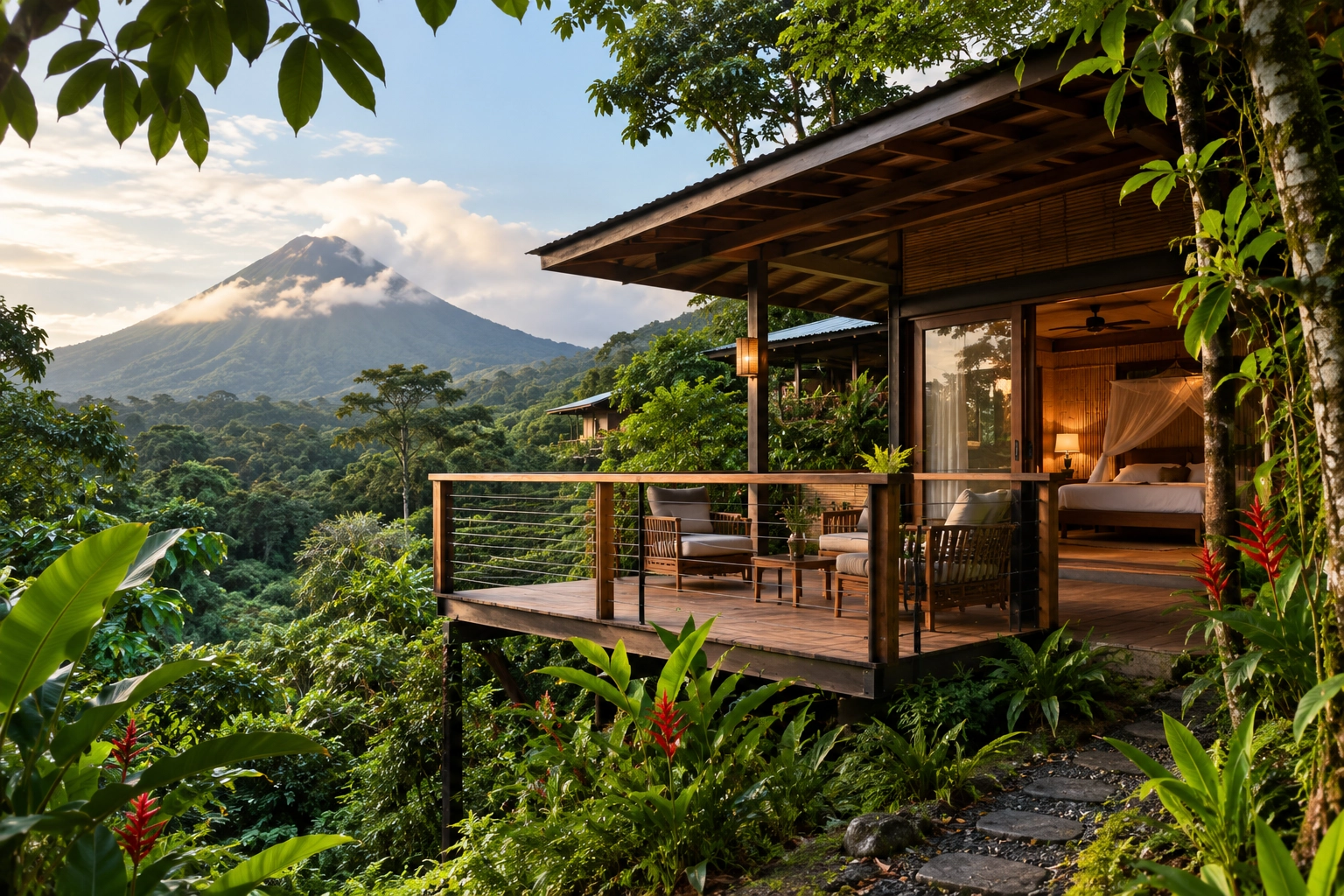
Competing online doesn’t require your property to outspend a global hotel brand or outrank every booking platform. As an eco-lodge or boutique hotel, you can attract valuable guests by being more relevant to the travelers your experience is designed for.
Instead of targeting broad searches such as “best hotels,” focus your SEO strategy on the locations, experiences, amenities, and travel priorities that make your property distinct. This gives you a more realistic opportunity to reach guests who already value what you offer.
In this guide, you’ll learn seven practical steps to sharpen your positioning, improve search visibility, build trust, and turn more qualified website visits into direct bookings.
1. Identify the Searches That Match Your Distinctive Experience
Search connects your property with travelers while they’re deciding what kind of stay fits their trip. It also gives smaller hotels an opportunity to compete through relevance rather than brand size. Someone researching eco tourism in Costa Rica or looking for a boutique hotel in Alfama is already revealing what matters to them.
Start with why guests choose your property, not a generic list of hotel keywords. The strongest opportunities appear where traveler demand and your specific experience overlap.
Look for recurring priorities in:
- Booking and package data
- Questions received before arrival
- Guest reviews
- Keyword and search-performance data
- Conversations with front-desk and reservations teams
Use these insights to identify the locations, activities, amenities, and trip types guests already associate with your property.
Search Opportunities for Eco-Lodges
Travelers researching eco-lodges may look for evidence that a property aligns with their environmental priorities. Relevant searches could include:
- Lodges for eco-conscious travelers
- Rainforest hotels surrounded by natural surroundings
- Eco-lodges with verified green initiatives
- Off-grid lodges using renewable energy sources
- Low carbon footprint accommodation
- Sustainable lodges with conservation programs
- Eco-lodges supporting local communities
Only target claims your property can support. Explain how energy is generated, water and waste are managed, conservation work is funded, or environmental impact is measured. Named programs, current certifications, and specific practices are more credible than broad labels such as “green” or “eco-friendly.”
Search Opportunities for Boutique Hotels
Within the hospitality industry, boutique properties often compete through specific combinations of location, design, atmosphere, and service. Travelers may compare them with larger luxury hotels, but their searches often reveal a preference for something more distinctive.
Relevant themes might include:
- Boutique hotels in Alfama, Lisbon
- Design hotels in Copenhagen
- Small hotels near the Colosseum
- Boutique hotels with rooftop bars in Rome
- Romantic boutique hotels in Paris
- Adults-only hotels in Mallorca
- Hotels near Milan Design Week
Design and personality become more valuable when connected to a clear travel priority. Show how your property offers neighborhood access, a romantic setting, proximity to an event, or a closer connection with local culture.
Boutique stays sell on personality, not size. Our guide shows how to market that: What Digital Marketing Strategies Work Best for Luxury Hotels?
2. Optimize the Pages Closest to a Booking
Your booking pages—and the commercial pages leading to them—need to do more than appear in search results. They should help travelers understand what they can reserve, decide whether it suits their trip, and take the next step confidently.
Prioritize pages covering:
- Rooms, suites, cabins, or villas
- Amenities and dining
- Activities and experiences
- Sustainability practices
- Packages and special offers
- Weddings, retreats, or celebrations
- Location and transportation
- Important traveler segments
Make sure each page answers four questions:
- What is available?
- Who is it best suited for?
- What does it include?
- How can the guest book or inquire?
Support these answers with clear descriptions, original images, practical details, and a visible path to availability. This helps qualified travelers move from comparing options to considering a reservation.
Create Separate Pages for Important Offers
Give an experience or service its own page when travelers may search for it independently, and you have enough information to support their decision.
An eco-lodge might create dedicated pages for environmentally friendly practices, sustainable travel, or food waste. A boutique hotel could do the same for its restaurant, wedding venue, pristine environments, neighborhood experiences, or rooftop space.
Avoid hiding every offer on one brief amenities page. At the same time, don’t create thin pages for minor features. Prioritize offers with real search demand, guest value, and enough detail to deserve a complete page.
3. Strengthen Your Local Search Visibility
Local SEO helps your property appear when travelers search for accommodation in a specific city, neighborhood, or area near a landmark. It also gives them essential information before they visit your website.
Keep your local presence accurate by:
- Completing and regularly updating your Google Business Profile
- Using a consistent name, address, and contact information
- Selecting the most accurate property categories
- Adding current, high-quality photos
- Responding to guest reviews
- Updating amenities and services
- Answering common traveler questions
- Linking to the most relevant website page
- Checking your information across travel directories
For a remote eco-friendly hotel, location clarity is essential. Explain road conditions, transfer options, travel times, and the correct meeting or arrival point.
For a boutique hotel, show why the neighborhood matters by highlighting walkability and proximity to relevant places, such as museums, restaurants, event venues, or transport connections.
Does your property show up right, everywhere travelers look? Our guide covers what to check: How Can Hotels Market to International Guests Online?
4. Create Destination Content Travelers Can Use

Your content should turn the experiences surrounding your property into practical trip-planning guidance. This helps travelers discover what they can do during their stay and understand why your hotel is well suited to the trip.
Eco-lodge content could cover:
- The best months for wildlife viewing
- What to pack for a rainforest stay
- Local conservation projects and sustainability initiatives in the area
- Respectful, community-led experiences involving indigenous communities
- Responsible ways to explore the breathtaking beauty of nearby forests, beaches, or reserves
- Sample birdwatching, wellness, or family itineraries
Boutique hotel content could cover:
- Nearby restaurants, galleries, and independent shops
- Seasonal festivals and cultural events
- The story behind the property’s architecture and design
- How the hotel combines local character with luxurious comfort
- Walking routes and transportation options
- Itineraries for couples, families, or event travelers
Each article should answer one real planning question and connect naturally to a relevant room, package, transfer, or experience page. This helps readers move from researching the trip to considering your property.
Avoid Content That Attracts the Wrong Audience
Traffic alone doesn’t make a content strategy effective. A broad article may generate visits without reaching people who could realistically stay at your property.
Before choosing a topic, ask:
- Does it serve one of your priority guest segments or source markets?
- Does it connect with an experience or service you provide?
- Can it lead naturally toward a booking-related page?
Prioritize content that attracts qualified travelers and supports their planning, not topics selected only for high search volume.
5. Demonstrate Your Claims With Specific Evidence
Travelers regularly see phrases such as “authentic experience,” “sustainable stay,” and “unique boutique hotel.” Repeating these claims won’t distinguish your property; explaining what makes them true will.
Use your website and search content to document the details behind your positioning:
| Eco-lodges can explain | Boutique hotels can explain |
| Conservation and wildlife-protection initiatives | The property’s architecture and history |
| Energy, water, and waste-reduction practices | Design choices, local artists, and materials |
| Community partnerships and local employment | Personalized service and culinary concepts |
| Environmental certifications | Neighborhood partnerships |
| Guest participation in responsible activities | Curated guest experiences |
Be precise. Instead of saying your lodge is an “environmentally friendly hotel,” explain the program, partner, or guest activity involved. Rather than calling a hotel “design-led,” identify the building’s history, creative concept, or locally made pieces.
Support these details with valuable content, original photography, staff expertise, guest stories, reviews, and recognized certifications. This provides guests with evidence to choose your property.
6. Earn Relevant Mentions and Links
Links and mentions from credible websites can support search visibility while introducing your property to travelers already interested in the area or experience you offer.
Look for valuable opportunities with:
- Local tourism organizations
- Nearby tourism businesses
- Conservation groups
- Travel associations
- Relevant publications
- Wedding and retreat professionals
- Travel advisors
- Experience providers
- Community partners
Focus on relationships with a genuine connection to your property. A conservation partner might reference your work, a wedding planner could include your venue, or a local operator could recommend your hotel in a practical travel guide.
You can also earn coverage through original research, useful local guides, conservation projects, events, or stories that publications have a reason to share. Avoid purchasing large quantities of unrelated links. A few credible mentions that reach qualified travelers are more valuable than many links from websites with no relevance to your property.
7. Turn Search Visibility Into Direct Bookings

A strong search position creates an opportunity, not a reservation. Visitors still need to understand your property, confirm that it suits their trip, and complete the next step without unnecessary friction. A clear path from interest to booking is what drives conversions.
Every important organic landing page should include:
- Clear, specific descriptions
- Current, high-quality images
- Practical location and arrival information
- Relevant accommodation options
- Transparent inclusions and policies
- Recent guest reviews
- Availability or booking access
- One clear next step
- Fast mobile performance
Use internal links to guide readers from informational content to the most relevant rooms, packages, and experiences. A guide to birdwatching, for example, could lead to your guided tour and accommodation pages rather than simply returning visitors to the homepage.
For highly personalized stays, direct booking may require additional reassurance. Offer an easy way to ask questions through a visible inquiry form, phone number, or messaging option, and make sure someone can respond promptly.
Ranking well is step one. Our guide covers the rest: How Can Hotels Reduce OTA Dependency With SEO?
How to Measure Whether Your Search Strategy Is Working
Rankings matter only when they help your property attract qualified travelers and generate bookings.
Measure SEO across the full journey:
- Visibility: Relevant non-branded searches and branded search growth
- Qualified traffic: Organic visits to commercial pages and performance by source market
- Booking intent: Availability searches and booking-engine entries
- Business results: Organic conversion rate, direct bookings, booking revenue, and assisted conversions
Review these results by landing page and search intent. A smaller room or experience page that regularly generates inquiries may be more valuable than a high-traffic article that leads to no further action.
Branded search growth can also indicate increasing awareness, but review it as a supporting signal because other campaigns, press, and offline activity may influence it.
Learn more in our blog: What Metrics Should Hotels Track in Digital Marketing?
Why Broad Hotel Keywords Aren’t Always the Best Opportunity
High search volume can make broad terms look attractive, but volume alone doesn’t indicate a strong SEO opportunity. Searches such as “hotels in Costa Rica” or “hotels in Lisbon” are highly competitive and give you little information about the traveler’s preferred location, property type, or reason for visiting.
Before targeting a keyword, evaluate:
- Relevance: Does the search accurately reflect your property?
- Intent: Is the traveler researching generally or comparing accommodation?
- Competition: Which OTAs, hotel groups, and publications already dominate the results?
- Page fit: Do you have a useful page that directly answers the search?
- Business value: Could this visitor realistically become a guest?
Specific searches combine details such as property type, exact location, amenities, experiences, guest priorities, trip purpose, or season.
| Broad search | More specific opportunity | Best page to target it |
| Hotels in Costa Rica | Eco-lodge near Corcovado with guided wildlife tours | Location or wildlife-experience page |
| Hotels in Lisbon | Boutique hotel in Alfama with a rooftop bar | Location or rooftop page |
| Sustainable hotels in Monteverde | Solar-powered eco-lodge in Monteverde | Sustainability page |
Broad keywords can still support long-term visibility, but they shouldn’t take priority over searches that closely match what you offer. A lower-volume term may generate fewer visits while bringing travelers much closer to booking.
Compete for the Travelers Who Value What You Offer
You don’t need to compete for every traveler. When you target relevant searches, strengthen the pages closest to a booking, and support your claims with real evidence, you make it easier for the right guests to recognize your property’s value.
At Nativo, we help you identify your strongest search opportunities, improve your website and content, and turn organic visibility into direct bookings. Contact Nativo today to build an SEO strategy around what your property does best.
FAQs
Can small hotels compete with OTAs in search results?
Yes. Small hotels can compete by targeting specific searches related to their location, property type, amenities, and experiences instead of the broadest hotel terms.
Does local SEO work for remote eco-lodges?
Yes. Accurate location details, an updated Google Business Profile, current photos, guest reviews, and clear arrival information can improve local visibility and booking confidence.
Should hotels prioritize service pages or blog content?
Prioritize commercial pages for rooms, packages, and experiences first. Use blog content to answer planning questions and guide travelers toward those pages.
How can SEO help hotels increase direct bookings?
SEO brings relevant travelers to your website. Clear landing pages, useful internal links, and an easy booking process can then turn that visibility into direct reservations.
How long does hotel SEO take to generate results?
SEO usually takes several months to produce meaningful results. Timing depends on your website, competition, target searches, content quality, and seasonal demand.