
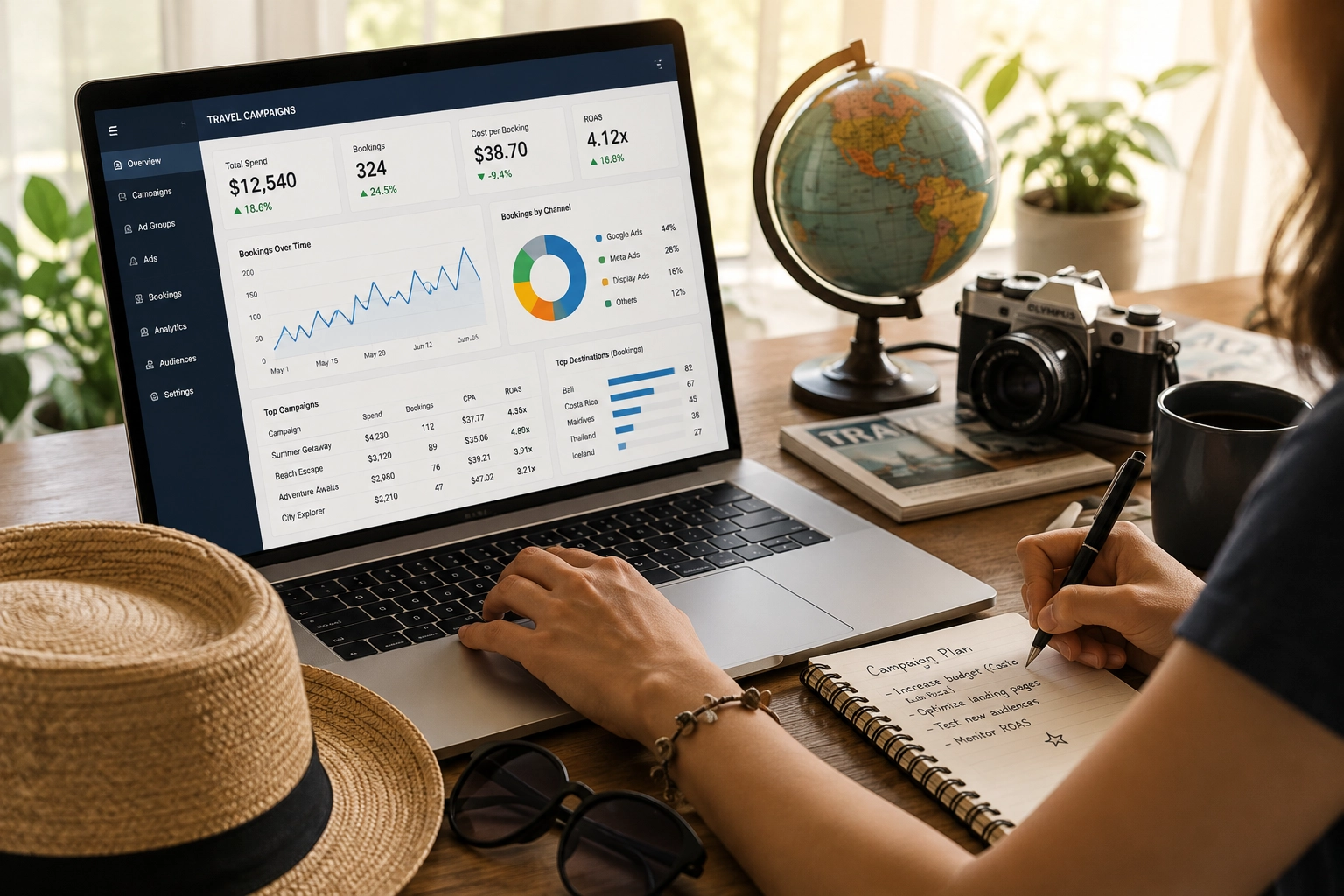
Paid media helps tourism businesses reach travelers at nearly every stage of the planning and booking journey, from the moment someone starts dreaming about a trip to the moment they hit “book now.” When it’s connected to the rest of your marketing, it doesn’t just add clicks: it helps everything work together toward more qualified traffic and bookings.
Paid ads can feel confusing—but when your campaigns are built around your seasonality, audience, and booking goals, they become a faster way to reach travelers who are ready to book.
In this guide, we’ll cover seven ways paid media supports a stronger tourism digital marketing strategy, how it works alongside SEO, social media, and email, and how to tell whether your investment is actually driving results.
Get a Free Consultation1. Paid Media Builds Awareness During Travel Inspiration

Not every traveler starts their search with a specific hotel, tour, or destination in mind. Many are just scrolling, watching videos, or looking for ideas. That’s where paid media can introduce your business before the traveler even knows what they’re looking for.
How Paid Media Supports Early Discovery
Awareness campaigns can introduce your brand in the following ways:
- Showcasing destinations through strong images and videos
- Reaching audiences with specific travel interests, like adventure, wildlife, or wellness
- Introducing new tours, properties, routes, or attractions
- Building visibility in new geographic markets
- Promoting lesser-known or off-season experiences that need a push
Global Examples of Travel Inspiration Campaigns
A safari operator might run video ads showcasing Botswana’s green season to travelers who’ve never considered visiting outside of the peak dry season. A resort in Greece might advertise shoulder-season stays to travelers already researching European trips. An adventure tour company might introduce Patagonia to hikers searching for less crowded destinations.
These campaigns don’t always lead to an immediate booking, and that’s fine. A traveler might not book that day, but seeing your business early can make it easier to remember when they’re ready to plan.
How to Measure Awareness Campaigns
Awareness campaigns shouldn’t be judged on bookings alone. Instead, look at:
- Reach and impressions
- Video views and watch time
- Engaged website visits and pages viewed
- Branded search growth (are more people Googling your business name?)
- Email sign-ups
If a campaign is building recognition and bringing more travelers into your website, it’s doing its job, even without an immediate booking.
2. Paid Media Captures Travelers With Booking Intent

While awareness campaigns help you reach travelers earlier in their journey, paid search can reach people who are already looking for what you offer, often when they’re much closer to booking.
Examples of High-Intent Tourism Searches
Some searches show a traveler is close to making a decision:
- Private airport transfer in Rome
- Northern lights tours in Tromsø
- Family hotel near Disneyland Paris
- Guided food tours in Mexico City
- Whale-watching tours in Maui
- Machu Picchu guided tours
Compare that to a broader search like “things to do in Peru.” The Machu Picchu search shows much clearer commercial intent, making searches like these especially valuable for paid search campaigns.
Match the Ad With the Traveler’s Search
The ad and landing page need to reflect what the traveler searched for. If someone searches for a small-group food tour in Rome, they should land on that specific tour page, not your homepage. Sending high-intent traffic to a generic page adds another step between the traveler and the booking.
What High-Intent Landing Pages Should Include
To convert this kind of traffic, your landing page needs:
- Clear experience details
- Pricing
- Availability
- What’s included in the tour
- Reviews
- Cancellation policies
- A visible, easy-to-find booking button
Paid media advertising can bring travelers with strong booking intent to your website, but the landing page still needs to turn that intent into a booking.
3. Paid Media Keeps the Brand Visible During the Booking Journey

Travelers rarely book after one visit to your website. Tourism purchases usually involve multiple searches, comparisons, and conversations before someone commits. Paid media can keep your business visible while the traveler is still deciding.
Prospecting vs. Remarketing
These two tactics work differently:
- Prospecting reaches travelers who haven’t interacted with your business yet. This grows your audience.
- Remarketing reconnects with people who already visited your website, viewed a tour, watched a video, or started (but didn’t finish) a booking. This moves interested travelers closer to a decision.
Adapt Remarketing to Previous Actions
The message should change based on what the traveler already did:
- Promote a full itinerary after someone visits a destination guide
- Show reviews after someone views a specific tour page
- Highlight your cancellation policy after someone checks prices
- Promote current availability after someone starts but doesn’t complete a booking
Avoid Excessive Ad Repetition
Nobody wants to be chased around the internet by the same ad for two weeks. That’s why you should use frequency controls, audience exclusions, regular creative refreshes, and stop acquisition ads once a traveler converts. Remarketing works best when it feels like a helpful nudge, not a pursuit.
4. Paid Media Supports Seasonal Demand

In the tourism industry, demand shifts constantly, driven by weather, holidays, school breaks, festivals, wildlife migrations, and how far in advance different travelers book. Paid media campaigns can give you fast visibility when you need it, without waiting months for organic rankings to catch up.
Seasonal Campaign Opportunities
A few examples of time-sensitive campaigns include:
- Ski packages before winter
- Summer family tours before school lets out
- Shoulder-season hotel offers
- Christmas market travel
- Wildlife migration tours
- Festival packages
- Last-minute availability pushes
Campaign Timing Should Follow Booking Behavior
Timing your campaign to the season itself is often too late. If travelers start researching Christmas markets in August, your campaign needs to launch in August too, not in November. The right timing follows when people actually plan and search, not when the season begins.
Adjust Budgets With Demand and Capacity
Your budget shouldn’t stay flat all year. Adjust it based on:
- Available inventory
- Booking pace
- Demand from key origin markets
- Seasonal pricing
- Remaining capacity
- Weather conditions
A busy period doesn’t always need more ad spend, especially if you’re already close to capacity. Sometimes the better opportunity is putting more budget behind slower dates, undersold experiences, or markets where you have room to grow.
5. Paid Media Strengthens Other Tourism Marketing Channels

Paid media doesn’t need to work alone. It can extend the reach and value of the content, SEO, social media, and email work you’re already investing in.
How Paid Media Supports Tourism SEO
Paid search advertising won’t directly improve your Search Engine Optimization (SEO) or organic rankings, but it can support your broader search strategy by:
- Providing visibility while your organic rankings are still building
- Helping you compete for highly competitive searches
- Testing search terms and messaging that can inform your SEO and content strategy
- Supporting seasonal landing pages that need a quick visibility boost
- Giving you a way to compare paid and organic search performance side by side
How Paid Media Extends Content Reach
If you’ve already invested in destination guides, itineraries, seasonal advice, tour comparisons, or trip-planning downloads, paid promotion can put that content in front of more of the right travelers instead of letting it sit and wait for organic traffic.
How Paid Media Supports Social Media
Paid social lets you promote your strongest visual content, best-performing organic posts, destination videos, or a brand-new experience beyond your current followers. Not every post needs a paid boost. Put your budget behind content that supports a clear goal and reaches the target audience that matters to your business.
How Paid Media Supports Email Marketing
Advertising can also grow your email list or reconnect with past guests through:
- Travel guide downloads
- Newsletter sign-ups
- Early-access offers
- Loyalty campaigns
- Repeat-visit promotions
Bringing travelers into your email audience also gives you a way to stay connected without paying for every future interaction.
6. Paid Media Helps Generate More Direct Bookings

Many tourism businesses rely heavily on OTAs and third-party marketplaces for visibility. Paid media creates another path, sending qualified travelers straight to your own website or booking engine and giving you another way to generate bookings without relying entirely on third-party platforms.
Where Paid Campaigns Can Send Travelers
Depending on your goal, campaigns can point directly to:
- Hotel booking pages
- Tour availability calendars
- Attraction ticket pages
- Package landing pages
- Group inquiry forms
- Call or messaging options
What a Direct-Booking Experience Needs
Sending traffic to your site is only half the job. Once travelers land there, they need:
- Current prices and availability
- Mobile-friendly booking tools
- Secure payment options
- Clear inclusions
- Visible cancellation policies
- Strong reviews and photography
- Fast-loading pages
Balance Direct and Third-Party Demand
Paid media isn’t about cutting OTAs out entirely. For many tourism businesses, they’re still a valuable part of the distribution mix. The goal is to build a healthier balance, where more travelers also discover and book directly with you, helping you reduce third-party commissions and build a stronger direct channel.
7. Paid Media Provides Useful Marketing Data

One of the most underrated benefits of paid media is speed. Campaigns can surface insights about your travelers quickly, while longer-term strategies like SEO can take more time to reveal clear patterns.
What Paid Media Can Reveal About Travelers
Campaign data can tell you:
- Which markets show the most interest
- Which destinations or tours attract the most demand
- Which audiences produce higher booking values
- Which travel dates are most popular
- Which headlines and visuals perform best
- Which landing pages actually convert
How Campaign Data Can Guide Other Channels
These insights don’t have to stay siloed in your ads dashboard. They can shape:
- SEO priorities
- Blog topics
- Website messaging
- Social content
- Email campaigns
- Packages and offers
- Seasonal planning
Focus on Business Results, Not Only Clicks
A campaign with a high click volume isn’t automatically a good campaign. When evaluating campaign performance, what matters is whether it’s generating qualified inquiries, profitable bookings, higher average booking values, or growth in a market you actually want to grow.
Which Paid Media Channels Support Tourism Marketing?
Not every paid media channel serves the same purpose. Some capture travelers who are actively searching, while others are better for building awareness or staying visible during a longer booking journey.
The best option depends on what you need the campaign to do:
| Paid media channel | How it supports tourism marketing |
| Paid search | Reaches travelers actively searching for a destination, hotel, tour, attraction, or other travel service. |
| Paid social | Builds awareness and inspires travelers through visual content on social platforms. |
| Display advertising | Keeps your brand visible across websites and can reconnect with travelers through remarketing. |
| Video advertising | Brings destinations and experiences to life when photos or text alone can’t tell the full story. |
| Hotel ads | Shows accommodation prices, availability, and booking options to travelers researching places to stay. |
| Tour and attraction ads | Promotes bookable experiences to travelers searching for things to do in a destination. |
| Sponsored content | Places destination stories, experiences, or offers within relevant publications or creator content. |
The right mix of digital channels depends on your target audience, what you’re selling, how travelers book, your budget, and what you want the campaign to accomplish. You don’t need to be everywhere. You need to invest in the channels that make sense for your travelers and business goals.
How Should Paid Media Align With the Tourism Marketing Funnel?

Different stages of the travel journey call for different messages and campaign goals. What works when someone is discovering a destination may not work when they’re comparing options or getting ready to book.
Here are the key moments to consider across the tourism marketing funnel:
Inspiration
Use visual ads to introduce destinations, experiences, and possibilities. The goal here might simply be a video view, a visit to a destination page, or remembering your brand for later.
Research
Promote destination guides, itineraries, comparison content, and practical planning information. The goal is to help travelers learn more and keep engaging.
Consideration
Lean on reviews, package details, hotel features, tour inclusions, and value-focused messaging. The goal is to help travelers compare your business with other options.
Booking
Use search ads, remarketing, availability messaging, pricing, and clear calls to action. The goal may be a booking, inquiry, phone call, or availability check.
Post-Trip
Promote repeat visits, referrals, loyalty offers, and reviews. Guests who’ve already traveled with you shouldn’t see the same messaging you use to win over brand-new travelers.
How Can Tourism Businesses Measure Paid Media Performance?
There isn’t one metric that tells you whether every paid campaign is working. What you measure should depend on the role that campaign plays in your tourism marketing strategy and what you want travelers to do next.
These are the metrics to track based on what your campaign is designed to achieve:
Awareness Metrics
For campaigns designed to introduce your business or destination, look at metrics such as:
- Reach
- Impressions
- Video views
- Branded search growth
- Engaged website visits
Consideration Metrics
As travelers move into research and comparison, useful metrics include:
- Click-through rate
- Landing page engagement
- Guide downloads
- Email sign-ups
- Tour or room views
- Availability searches
Booking and Revenue Metrics
For campaigns designed to drive direct business results, track:
- Conversion rate
- Cost per booking
- Revenue
- Return on ad spend (ROAS)
- Average booking value
- Qualified leads
- Cancellation rate
Looking at revenue alongside costs and booking quality gives you a much clearer picture than judging campaign performance by traffic alone.
Tracking Across Tourism Booking Systems
Accurate measurement gets more complicated when travelers click an ad on your website but complete their reservation through a separate booking engine. Make sure conversion tracking works across both systems, use consistent campaign parameters, and set up cross-domain measurement when needed.
Without that connection, bookings can lose their original traffic source along the way, making campaigns look less effective than they actually are.
Build a More Connected Tourism Strategy With Paid Media
Paid media isn’t a replacement for SEO, content, or social media. It works alongside them to build awareness when travelers are still dreaming, capture demand when they’re ready to book, keep your brand visible throughout their research, and uncover insights you can use across your marketing strategy.
If you want a paid media strategy built around qualified traffic, direct bookings, and results you can actually measure, we can help. Contact Nativo today to schedule a discovery call.
Get a Free ConsultationFAQs
What is paid media in tourism marketing?
Paid media in tourism marketing includes paid search, social, display, video, and sponsored ads used to reach travelers throughout their journey.
Which paid advertising channels work best for tourism businesses?
The best paid advertising channels depend on your goals, but paid search, social, video, and remarketing are common options.
Can paid media help increase direct tourism bookings?
Yes, paid media can increase direct tourism bookings by sending qualified travelers to your website or booking engine.
How does paid media support tourism SEO?
Paid media supports tourism SEO with added search visibility, keyword insights, and faster support for seasonal campaigns.
Is paid social media effective for tourism marketing?
Yes, paid social media is effective for tourism marketing, especially for reaching and inspiring travelers with visual content.
How much should tourism businesses spend on paid advertising?
Tourism businesses should set paid advertising budgets based on their goals, seasonality, booking value, capacity, and campaign performance.