
Not every marketing channel will help you get more direct bookings. And if you’re investing time or budget into the wrong ones, your tourism business might get stuck chasing visibility while OTAs and bigger travel brands will continue to dominate online.
Multiple tourism brands end up with disconnected marketing efforts, rising ad costs, and no clear idea which channels actually drive reservations. Meanwhile, travelers now move across multiple platforms before they book, from Google searches and social media to email and paid ads.
So which digital marketing channels work best for tourism brands? You’re about to find out!
In this guide, you’ll learn what each channel does best, where it fits into the traveler journey, and how to prioritize your marketing strategy based on your goals, audience, and budget.
Contact Our TeamWhy Choosing the Right Marketing Channels Matters in Tourism
Travelers no longer follow a straight path before booking a trip, which means your visibility, bookings, and ability to stay competitive now depend on how well your marketing strategy connects across different platforms.
See how the right marketing channels can help your tourism business grow:
Travelers now discover trips across multiple platforms
The way travelers research trips has changed a lot over the last few years. People no longer rely on a single platform to decide where to go, what to do, or which company to book with.
How does it work? A traveler might first discover your business through an Instagram Reel, YouTube video, or TikTok recommendation. After that, they often continue researching through Google searches, travel blogs, Google Maps, OTAs, and review platforms before they feel ready to book.
Social media has become a go-to source for travel inspiration and destination discovery. Search engines and review sites also help travelers compare options, check credibility, and validate their decisions before making a reservation.
Relying on one channel creates risk
Dependence on a single marketing channel can lead to unstable visibility and inconsistent bookings over time.
For example, relying only on OTAs can reduce your control over customer relationships and direct traffic. Depending only on social media can become risky when algorithms change or organic reach drops. Paid advertising can also become harder to sustain as competition increases and ad costs continue rising.
Seasonality creates another challenge. A channel that performs well during peak travel months may slow down significantly during lower-demand periods.
When your tourism business depends too much on a single source of traffic, even minor platform changes can quickly affect your visibility, inquiries, and reservations.
The strongest tourism brands build a connected marketing strategy
The tourism brands that generate the most consistent visibility usually don’t rely on a single platform. Instead, they build a connected strategy in which multiple channels support one another.
Different channels help travelers at different stages of the booking journey. Social media creates awareness and inspiration. SEO helps travelers discover your business while researching trips. Reviews and content build trust. Paid ads help capture high-intent searches and bring travelers back after they leave your site.
Best of all, when these channels work together, your digital marketing strategy becomes more stable, more visible, and more effective at driving direct bookings over time.
Learn more about how to increase your direct bookings with tourism digital marketing in our blog!
How Travelers Actually Move From Inspiration to Booking

Most travelers don’t discover a destination and book it immediately. Before making a reservation, they usually move through different stages to gather ideas, compare options, and decide which experience feels right for them.
These are the stages that influence travel decisions before a booking happens:
Stage 1: Inspiration
For many travelers, the booking journey starts long before they search for prices or availability. It usually begins with content that grabs their attention and piques their interest in a destination or experience.
Platforms like Instagram, TikTok, YouTube, and creator content play a big role here because travelers spend time exploring ideas, saving destinations, and comparing experiences before they’re ready to book anything.
Stage 2: Research and comparison
Once travelers become interested in a destination or experience, they usually start researching their options more seriously.
Google searches, blogs, reviews, maps, OTAs, and destination pages become much more important during this stage because travelers compare pricing, activities, credibility, and traveler feedback before deciding who they trust enough to book with.
Stage 3: Booking intent
As travelers narrow down their options, their searches usually become much more specific and action-oriented.
At this stage, branded searches, Google Ads, optimized landing pages, and retargeting campaigns help keep your business visible while travelers make their final decision. The booking experience also matters a lot here, as slow pages, confusing steps, or unclear pricing can quickly push travelers toward another option.
Stage 4: Retention and repeat bookings
Tourism marketing should continue after the first reservation, especially if you want more repeat bookings, referrals, and long-term customer relationships.
Email marketing, remarketing campaigns, loyalty-building strategies, and post-trip communication all help keep your business connected with travelers after their experience ends.
Which Digital Marketing Channels Work Best for Your Tourism Brand?
Your target audience probably won’t discover, research, and book your tours through a single platform. That’s why relying too heavily on one channel can make it harder to stay visible and consistently attract the right travelers.
Before deciding, these are the multiple marketing channels that you should consider:
SEO (Search Engine Optimization)

With billions of searches happening on Google every day, search engines remain one of the main ways people discover destinations, tours, and travel experiences online.
That’s why SEO is such a valuable long-term channel in tourism marketing. Instead of depending too much on OTAs or paying for ads all the time, SEO helps travelers find your business directly on Google.
Destination pages, blogs, FAQs, and other useful travel content all increase your chances of appearing at different points in the booking journey.
And unlike paid campaigns, strong SEO content can continue attracting website traffic and direct reservations long after it’s published.
Local SEO
Local SEO helps your business appear in searches connected to specific destinations and nearby experiences.
For example, travelers may search for things like “best boat tours in Amsterdam,” “things to do near Machu Picchu,” or “family activities in Orlando” while planning their trip or exploring a destination.
Pro tip: Optimizing your Google Business Profile, local pages, maps visibility, and online reviews can help more travelers discover your business during those searches.
Long-tail and conversational searches
People search differently now, especially when planning trips online. Travelers don’t just search broad terms like “Paris tours” or “Thailand activities” anymore. Many searches are much more specific, like “best food tours in Rome for couples” or “guided hiking tours near Patagonia.”
Creating content around these more detailed searches can help you reach travelers who already have a clearer idea of what they want to book.
Google Ads

Before we get into this channel, you might’ve heard terms like paid search or search engine marketing (SEM). In most cases, these terms refer to paid ads that appear in search engine results, usually through platforms like Google Ads.
Holding 81.95% of the global search market, Google remains the most widely used search engine worldwide.
Google Ads puts your tourism business in front of people already searching for destinations, tours, and travel experiences online. Unlike SEO, which takes time to grow, Google Ads can give you visibility much faster, especially during seasonal campaigns and high-demand travel periods.
Some campaigns focus on branded searches, where travelers already know your business name. Others target non-branded searches like “best safari tours in Kenya” or “snorkeling tours in Cancun” to help new travelers discover your business.
Ads also work much better when they lead to strong landing pages. If someone clicks your ad and lands on a slow or confusing page, there’s a good chance they’ll leave without booking.
Social Media Marketing

Social media keeps your brand visible while people plan trips, compare destinations, and look for experiences that actually feel worth booking.
It also gives travelers a more personal look at your business through videos, behind-the-scenes moments, and user-generated content people actually enjoy watching and sharing online.
Still, strong engagement with your social media posts doesn’t always translate directly into bookings. Many travelers continue researching on Google, in reviews, on blogs, and on OTAs before making a final decision.
Look at the social media platforms worth paying attention to:
Most people have saved a hotel, restaurant, or destination on Instagram at some point.
Travelers use Instagram to compare destinations, check activities, and get a better sense of what an experience looks like before booking. Reels, stories, carousel posts, and other travelers’ content all help keep your brand part of that process.
One thing you’ll notice about Instagram is that it changes quickly. Hence, posting occasionally usually makes it harder for your brand to stay visible once trends, formats, and the algorithm start shifting.
According to Demandsage, Facebook has more than 3 billion monthly active users, making it one of the biggest platforms people still use while planning trips.
Hotel suggestions, tour advice, destination tips, and traveler reviews keep showing up through groups, shared posts, and comment sections every day. That can help your business stay in front of people while they’re still deciding where to go or what to book.
However, organic reach on Facebook can be harder to grow without consistent activity, community engagement, or paid promotion behind your content.
TikTok
Have you noticed how some destinations suddenly go viral after a few TikTok videos start circulating?
People use TikTok to look for places that feel more real, less scripted, and easier to picture themselves visiting. One good video can quickly put your business in front of thousands of potential travelers, especially during seasonal travel moments or fast-moving trends.
Just keep in mind that attention moves fast there. A video may perform really well one week and completely slow down the next, which is why consistency usually matters more on TikTok than highly polished content.
Pinterest can help your brand reach people early while they’re still collecting travel ideas and deciding where they want to go.
Many users save hotel inspiration, travel guides, itineraries, restaurants, and activity ideas they want to revisit later. And unlike many other social platforms, Pinterest content can continue getting views and clicks for months after it’s posted.
That said, Pinterest usually delivers slower results than platforms like TikTok or Instagram, especially if your content depends heavily on trends or quick engagement.
Influencer marketing and creator content
Many travelers trust creators because their content usually feels more natural and personal than traditional travel advertising.
Trip recaps, hotel reviews, restaurant videos, and day-in-the-life content give people a closer look at what the experience is actually like before spending money on it.
That’s one of the reasons influencer marketing and creator content continue working so well in the travel industry.
For that reason, it’s important to work with creators who genuinely match your destination, audience, or travel style. People notice quickly when a partnership feels forced, which can make the content feel less trustworthy and believable.
Email Marketing

Not every traveler books the first time they visit your website, which is why email marketing can help you stay connected with people who have already shown interest in your business.
Seasonal campaigns, abandoned inquiries, personalized recommendations, follow-up emails, and upsells can all help bring potential travelers back when they’re ready to book.
Email marketing also tends to generate some of the strongest returns in digital marketing because you’re speaking to people who already know your brand or have already shown booking intent.
If you decide to invest in this channel, focus your emails on traveler behavior rather than sending the same message to everyone on your list. Someone who downloaded a travel guide, abandoned a booking, or already visited your destination usually responds differently.
Remember, generic emails sent too often also tend to make people ignore, unsubscribe, or stop engaging with your messages.
Content Marketing

Blogs, destination guides, FAQs, travel tips, and educational content can put your brand in front of travelers much earlier in the planning process. Useful content also builds more confidence while people compare destinations, activities, and travel options online.
In addition, content marketing strengthens your SEO strategy by increasing the number of destination and travel-related searches your website can appear for over time. And as Google continues expanding AI Overviews, well-structured, informative content has more opportunities to appear directly in search results.
Evergreen travel content, itineraries, and destination guides can continue attracting traffic months after publication, especially when the information remains up to date and relevant.
Pro tip: A good content strategy starts by answering real traveler questions, not just promoting services. That usually creates more opportunities for your pages to rank and stay useful over time.
YouTube and Video Marketing

Before booking a hotel, tour, or destination, many travelers head to YouTube to research the experience in more detail. And with YouTube reaching billions of logged-in users every month (YouTube Official Blog), it remains one of the largest platforms for long-form travel content online.
Full walkthroughs, destination previews, virtual tours, travel vlogs, and itinerary videos give travelers a closer look at what they can realistically expect before booking.
Unlike short-form social content, YouTube usually supports deeper travel research because people spend more time watching, comparing, and evaluating experiences there.
Video content also helps build trust, as travelers can see details such as transportation, room conditions, tour pacing, crowd levels, weather, and the overall experience before spending money on a trip.
A good YouTube strategy is to create videos about the same questions travelers already search for on Google. That usually gives your content a better chance of appearing across both platforms over time.
Retargeting Ads
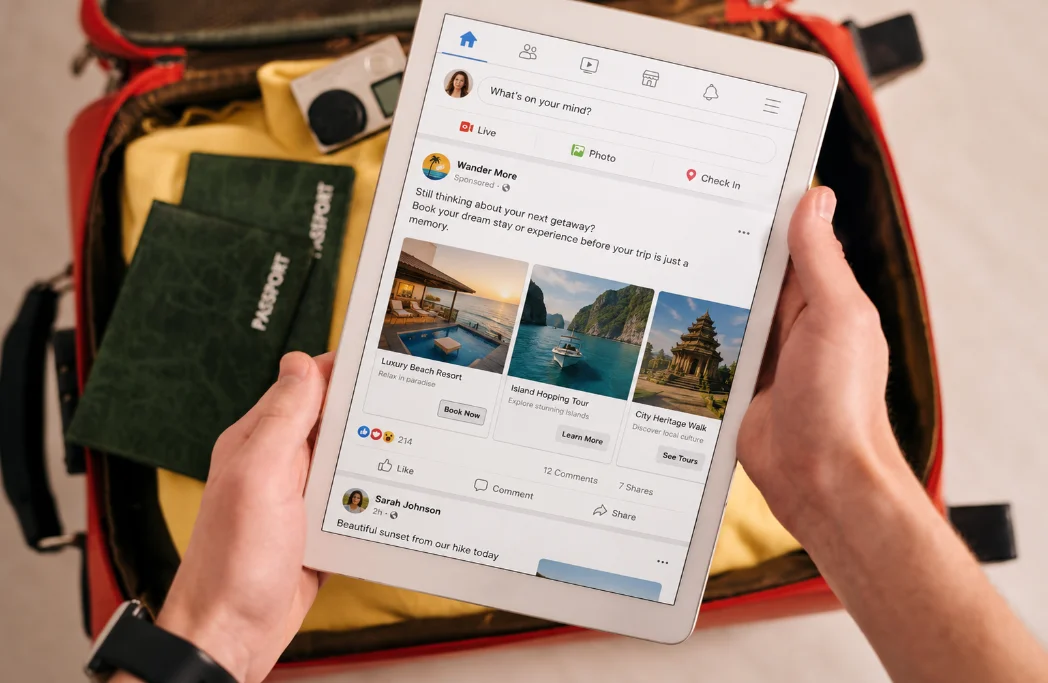
Have you ever looked at a hotel, tour, or flight online and then started seeing ads for it afterward while scrolling through Instagram, Facebook, or other websites? That’s retargeting.
These ads help your business reconnect with people who have already visited your website but left before booking, giving you another chance to recover potential bookings that didn’t happen during their first visit.
Campaigns like these usually run across Google and Meta platforms while travelers continue comparing destinations, prices, tours, or accommodations.
Retargeting can be very effective in tourism because travel bookings rarely happen immediately. People often spend days or even weeks researching before making a final decision.
It also tends to perform better than colder advertising because you’re reaching people who already recognize your brand or showed interest before.
For optimal results, our ad specialists recommend refreshing your visuals, offers, or messaging regularly so your ads don’t feel repetitive after multiple views.
The Best Marketing Channels Based on Your Tourism Business Type
Not every tourism business should prioritize the same marketing channels. The platforms and strategies that work for a tour operator may not work the same way for a luxury travel brand, boutique hotel, or destination marketing organization.
See which online channels usually make the most sense for different tourism businesses:
For tour operators
SEO, Google Ads, Instagram, TikTok, and retargeting campaigns often drive the strongest visibility and booking opportunities because travelers usually compare pricing, reviews, activities, and availability before booking tours online.
For boutique hotels and eco-lodges
Instagram, YouTube, Google Business Profile optimization, SEO, and review platforms help travelers research locations, amenities, scenery, and overall guest experience before making a reservation.
For luxury and custom travel brands
Email marketing, YouTube, creator partnerships, and highly personalized content usually perform well because travelers booking higher-end experiences often spend more time researching before making a decision.
For destination marketing organizations
Content marketing, SEO, YouTube, social media, and creator collaborations help increase destination visibility while supporting local businesses, attractions, and regional tourism awareness online.
Which Marketing Channels Deliver the Best ROI for Tourism Brands?

Different marketing channels can bring very different returns depending on your goals, audience, and booking cycle. Some channels generate faster reservations, while others continue bringing visibility and traffic over a longer period of time.
Take a look at which ones can deliver different results depending on your marketing goals:
Best channels for direct bookings
Google Ads, SEO, retargeting campaigns, and email marketing often generate the strongest direct booking opportunities because they reach travelers closer to the moment of final decision.
These channels become especially effective when someone already knows what they want, searches with high intent, or returns to review pricing, availability, or tour details before reserving.
Strong landing pages, updated information, clear pricing, and a smooth booking experience also matter a lot here. Even high traffic numbers can struggle to convert when the reservation process feels slow or confusing.
Best channels for long-term growth
SEO, content marketing, YouTube, and evergreen destination content are your best allies for long-term growth because they can continue bringing visibility long after the content is published.
Destination guides, FAQs, itinerary content, and educational travel resources help your business appear earlier in the traveler journey while building search visibility over time.
This approach usually takes longer to grow, but it can reduce your business’s reliance on paid advertising alone.
Best channels for fast visibility
Google Ads, Meta Ads, influencer collaborations, and short-form social content can help your business gain visibility much faster than channels that depend on long-term organic growth.
These channels are especially useful during seasonal promotions, new tour launches, limited-time campaigns, or periods where you need quicker exposure.
Fast visibility still depends heavily on timing, targeting, creative quality, and budget. Strong campaigns usually combine clear messaging with visuals that immediately show the experience travelers are considering.
Best channels for traveler trust and engagement
YouTube, creator content, reviews, email marketing, and social media can all strengthen traveler trust by giving people more ways to evaluate your business before booking.
Detailed videos, traveler feedback, consistent communication, and real experiences often make potential guests feel more comfortable spending money on a tour, hotel, or destination experience.
Trust usually builds more slowly than visibility or traffic, which is why consistency across your content, reviews, and customer experience becomes so important over time.
Common Mistakes Tourism Brands Make With Digital Marketing
Tourism businesses invest time and money into digital marketing but still struggle to turn visibility into consistent bookings. In many cases, the problem is not the effort itself, but how the strategy is being managed across different channels.
Here are some mistakes that might be limiting your brand’s online growth:
- Relying too heavily on social media alone: Social media can generate strong visibility, but algorithms, reach, and trends change constantly. That’s why it usually works best alongside SEO, email marketing, paid campaigns, or content that continues attracting traffic outside social platforms.
- Investing in ads without conversion tracking: Without proper tracking, it becomes difficult to know which campaigns are actually generating bookings and revenue. Strong engagement or traffic does not always translate into real business results.
- Ignoring SEO and organic search visibility: Many travelers still use Google throughout the booking journey. Businesses that ignore SEO miss opportunities to appear when people search for destinations, activities, accommodations, or travel-related questions online.
- Treating every channel the same: Travelers use each platform differently. Someone scrolling on TikTok behaves very differently from someone comparing reviews on Google or researching destinations before booking, which is why messaging and content should adapt to each channel.
- Focusing on vanity metrics instead of bookings: Follower counts, views, and engagement can look impressive even if they don’t translate into reservations. Qualified traffic, booking inquiries, conversion rates, repeat customers, and direct bookings usually tell a much clearer story about performance.
So, Which Digital Marketing Channels Work Best for Tourism Brands?

No single marketing channel drives every booking or every stage of the traveler journey. The strongest tourism marketing strategies usually combine channels that help travelers discover your business, build trust in your brand, and eventually book with you, rather than relying too heavily on a single platform.
SEO and content marketing can strengthen long-term visibility. In contrast, social media, creator content, video, paid ads, and retargeting campaigns help travelers discover, compare, and book experiences at different stages of the booking journey.
The most effective approach is usually understanding where your audience spends time, how they research trips, and which channels make the most sense for your business goals.
Build a Smarter Tourism Marketing Strategy With Nativo!
It’s safe to say there’s no single marketing channel that works for every tourism business. The right mix depends on your audience, goals, and the type of travelers you want to attract. But the right combination of channels can help more travelers find your business and, over time, feel more confident booking with you.
If you need expert help figuring out which strategy makes the most sense for your business, contact Nativo today and let our team help you drive more direct online reservations.
FAQs
What are the best digital marketing channels for tourism brands?
SEO, Google Ads, social media, content marketing, email marketing, and retargeting are among the most effective digital marketing channels for tourism brands. The best combination usually depends on your audience, booking cycle, and the type of travel experiences you offer.
How do tourism businesses get more direct bookings?
Tourism businesses usually get more direct bookings by making it easier for travelers to find, trust, and book directly through their website. Strong SEO, Google Ads, retargeting campaigns, and optimized landing pages can all help reduce dependence on OTAs.
Is SEO worth it for tourism businesses?
Yes, SEO is worth it for tourism businesses because travelers often search for destinations, activities, accommodations, and travel advice before booking. Strong search visibility can continue bringing traffic and direct reservations long after content is published.
Do travel brands still need social media marketing?
Yes, travel brands still need social media marketing because many travelers discover destinations and experiences through platforms like Instagram, TikTok, Facebook, and YouTube. It also helps them stay visible during the early research stage before people decide what to book.
How do travelers discover tourism brands online?
Most travelers discover tourism brands through a combination of Google searches, social media, YouTube videos, reviews, blogs, and travel content. Many people use several platforms before choosing where they want to stay, visit, or book.