
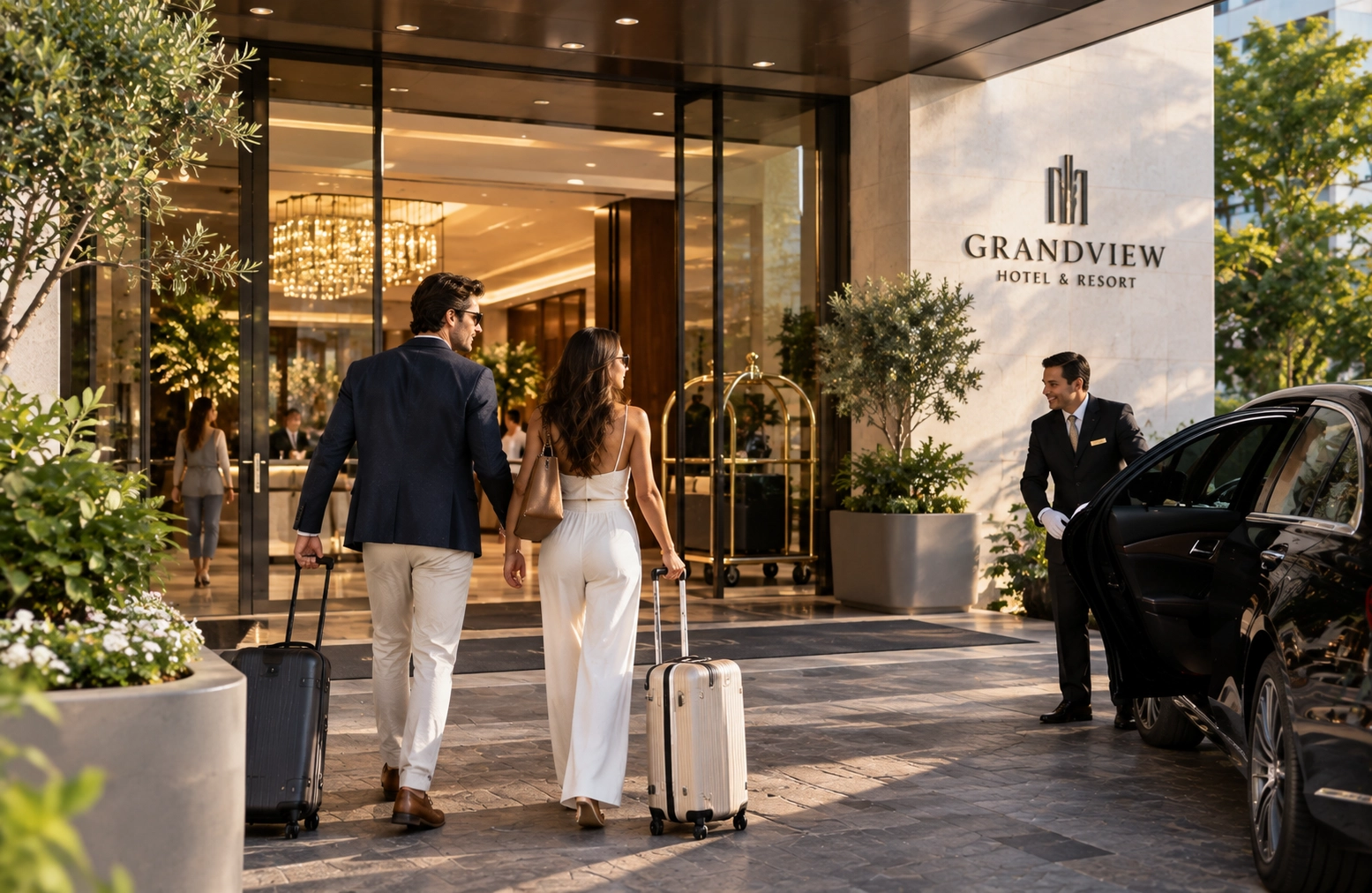
OTAs can bring your hotel valuable visibility and reservations. The challenge begins when they become the main way travelers find and book your property, leaving your direct channel with a much smaller role.
SEO helps your official website appear throughout the planning journey. A traveler might search for “family hotels near Disneyland Paris,” discover your property on an OTA, and later search your hotel by name before deciding where to book. Strong organic visibility gives you more opportunities to bring that traveler to your own website and complete the reservation directly.
This guide walks you through six practical steps to protect branded searches, reach new guests, strengthen your booking pages, and increase your share of direct reservations.
1. Understand Where Your Hotel Depends Most on OTAs
Before investing in SEO, identify where OTA reliance costs you most. The goal isn’t to eliminate these platforms, but to find bookings your direct channel could capture more profitably.
Establish your baseline by reviewing:
- Direct versus OTA booking share: How many reservations come through your hotel website compared with OTAs?
- OTA commission costs: How much revenue do commissions remove from each booking?
- Revenue by channel: Which sources generate the most income?
- Average booking value: Do direct and OTA guests spend differently?
- Length of stay: Which channels attract longer visits?
- Cancellation rate: Where are bookings most likely to cancel?
- Net booking revenue: What remains after commissions, cancellations, and acquisition costs?
- Season and source market: When and where is OTA dependency highest?
- Repeat OTA bookings: Are returning guests still booking through commissioned channels?
Don’t judge OTA dependency by reservation volume alone. A channel may generate many bookings but deliver less net value. This comparison shows where SEO and direct-booking improvements can make the greatest financial difference.
Learn What Metrics Should Hotels Track in Digital Marketing
2. Protect Your Hotel’s Branded Search Demand

Some potential guests discover your property on an OTA, then search for its name on Google before deciding where to book. At that moment, your official website should be easy to identify, trust, and use.
Strengthen your branded search presence by:
- Optimizing the homepage: Include your official hotel name and location in the page title, main heading, and copy.
- Updating your Google Business Profile: Keep your website link, photos, amenities, and contact details current.
- Maintaining consistent listings: Use the same name, address, and phone number across major directories.
- Making the official site recognizable: Use a clear domain, branding, and page title that distinguish it from OTA listings.
- Monitoring branded search ads: Check whether OTAs or competitors advertise for your hotel’s name.
- Providing accurate information: Keep room details, rates, policies, and amenities up to date.
- Making availability easy to find: Place a clear booking button prominently on every important page.
The goal is simple: when your hotel appears in a branded search, your website should offer the clearest route to booking. This can drive direct bookings from travelers who already know your property and are close to making a decision.
Want to be the clear choice when guests search your name? Read more in our blog: Discover What Digital Marketing Strategies Work Best for Luxury Hotels
Give Travelers a Reason to Choose the Official Website
Once travelers find your website, your direct booking strategy should answer one practical question: why reserve here instead of returning to third-party platforms? Repeating the same room descriptions and rates shown elsewhere won’t be enough.
Meaningful direct-booking benefits could include:
- Flexible cancellation policies: Give guests more control when their plans change.
- Complimentary amenities: Include benefits such as free breakfast, parking, or airport transfers.
- Complimentary upgrades: Offer higher-category hotel rooms when availability permits.
- Early check-in or late checkout: Add convenience without reducing the room rate.
- Property credits: Provide value guests can use for dining, spa services, or activities.
- Exclusive packages or discounts: Create packages or exclusive discounts available only through your website.
- Direct access to staff: Make it easier to arrange special requests or receive personalized assistance.
Display these benefits beside your rates and booking buttons, not on a page travelers may never visit. Keep every promise clear and operationally sustainable. Guests don’t always book directly for the lowest price; useful flexibility, added value, and easier communication can be just as persuasive.
3. Target High-Intent Searches Beyond Your Hotel Name
Branded SEO reaches travelers who already know your property. To reduce OTA dependency further, you also need to appear while guests are still comparing where to stay.
Many hotels compete for broad terms like “hotels in Paris,” but specific searches reveal more about what a traveler needs:
- Boutique hotel in Alfama, Lisbon
- Hotel near Heathrow Terminal 5
- Family-friendly hotel near Disneyland Paris
- Rome hotel with a rooftop pool
- Wedding hotel in Tuscany
- Vienna Christmas market hotel package
- Business hotel near Messe Frankfurt
Prioritize searches your property can genuinely satisfy and that are likely to lead to an availability check, inquiry, or reservation. A lower-volume keyword may have greater commercial value when the traveler’s needs closely match your offer.
Remember that discovery and booking may happen in different sessions. Someone might find you through organic search and return later as direct traffic, so review assisted conversions alongside last-click bookings.
Match Each Search With the Right Commercial Page
The visitor should land on the page that answers the search directly. Someone looking for a “spa hotel in Bath” shouldn’t have to search your homepage to confirm that you have a spa.
Create or strengthen dedicated pages for:
- Rooms and suites
- Amenities
- Restaurants and bars
- Spa and wellness
- Meetings and events
- Weddings
- Packages and seasonal offers
- Location and transportation
- Families, couples, business travelers, or other priority segments
Each page should explain what you offer, who it suits, what is included, and how to proceed. Add original images, relevant guest reviews, practical details, access to availability, and one clear next step. This creates a shorter, more convincing path from search result to direct reservation.
4. Reach Travelers Earlier With Destination Content
OTAs usually enter the journey once travelers begin comparing properties. Your hotel can appear earlier by publishing useful content for people still deciding when to visit, where to stay, and how to plan their trip. These guides can place you in Google search results before the traveler has chosen a hotel.
Useful topics might include:
- The best months to visit Lisbon
- Where to stay in Rome for a first trip
- Things to do near your hotel
- How to travel from Heathrow Airport to central London
- Which Paris neighborhood works best for families
- Seasonal events near your property
- What couples, families, or business travelers should know before arriving
Choose subjects connected to your location, services, and typical guests. A broad article may attract traffic, but it offers little value if readers have no realistic reason to consider your hotel.
Learn How Hotels Can Market to International Guests Online
Connect Planning Content With Booking Opportunities
Don’t leave readers without a useful next step. Add internal links that connect each planning question with the part of your hotel that can support the trip:
- A Milan Design Week guide can lead to your event package and location page.
- A Disneyland Paris family itinerary can link to connecting rooms and family amenities.
- A Heathrow transportation guide can direct readers to your transfer and arrival information.
These links help travelers continue planning through your direct booking channels. Keep the transition relevant: answer the question thoroughly first, then show how your rooms, packages, or services fit naturally into the trip.
5. Make Your Website Easier to Book Than an OTA

SEO may bring travelers to your website, but they can still return to an OTA if comparing rooms or completing a reservation feels easier there. To generate more direct bookings, your site should remove uncertainty at every step.
Make sure it provides:
- Fast performance on mobile devices
- Simple navigation to rooms, rates, and policies
- Current room descriptions and original photos
- Transparent rates and included benefits
- Clear taxes, fees, cancellation terms, and payment policies
- Prominent access to availability
- A secure, user-friendly booking engine
- Consistent details across the website and booking engine
- Direct assistance for questions, group reservations, or complex stays
Use your analytics to review guest behavior across devices and traffic sources. If visitors explore rooms but rarely check availability, the problem may be the page—not the demand.
Reduce Friction in the Booking Engine
An abandoned reservation doesn’t always mean the traveler changed their mind. The booking process may have become slow, confusing, or difficult to trust.
Review:
- Mobile usability: Can guests complete every step comfortably on a phone?
- Loading speed: Do rates and room options appear quickly?
- Booking steps: Are there unnecessary pages or required fields?
- Rate plans: Are differences between options easy to understand?
- Fees: Are all costs shown before the final step?
- Payment methods: Can domestic and international guests use familiar options?
- Error messages: Do they clearly explain how to fix a problem?
- Availability: Does inventory match what your website promotes?
- Currency and language: Can priority markets understand prices and instructions?
Improved rankings won’t reduce OTA dependency if your checkout feels less reliable than the alternative. Fix the steps causing the most abandonment first; a faster, clearer process can encourage direct bookings without requiring more traffic.
6. Measure Whether SEO Is Increasing Direct Bookings
Rankings and traffic show whether travelers are finding you, but they don’t prove that SEO is reducing OTA dependency. Connect your website analytics, booking engine, and reservation data whenever possible.
Track performance across three stages:
Visibility and interest
- Non-branded organic visibility
- Branded search traffic
- Organic visits to commercial pages
Booking activity
- Booking-engine entries from organic traffic
- Organic conversion rate
- Direct bookings attributed to organic search
Revenue and channel value
- Organic booking revenue
- Average booking value
- Cancellation rate
- Net direct revenue
- Direct versus OTA booking share
Break these results down by season, source market, device, and landing page. This helps you see whether a specific audience or page is producing valuable reservations—not simply more visits. If organic traffic rises but booking-engine entries remain unchanged, the search intent or landing page may need attention.
An increase in direct booking share is encouraging, but it doesn’t automatically prove that SEO caused it. Pricing changes, room availability, promotions, paid campaigns, and OTA distribution can also affect the result. Note these changes in your reports so you can evaluate SEO within the correct business context.
Understand Why Hotel Digital Marketing Performance Changes With the Seasons
What SEO Can and Can’t Do About OTA Dependency
SEO can strengthen your direct channel, but it won’t replace OTA demand overnight. It works best as part of a broader distribution strategy rather than as a quick solution.
| SEO can | SEO can’t |
| Help your official website capture branded searches | Guarantee top rankings or immediate bookings |
| Introduce your property through relevant non-branded searches | Replace OTA visibility in every market |
| Bring qualified travelers to your commercial pages | Overcome uncompetitive rates or limited availability |
| Support direct bookings and reduce commission costs over time | Fix a confusing website or booking engine by itself |
| Build lasting visibility across the planning journey | Create demand where very few travelers are searching |
| Give you more control over your content and booking experience | Prove that every increase in direct revenue came from SEO alone |
OTAs may still provide useful reach, especially in new markets or periods of lower demand. The realistic goal is not to eliminate them completely. It is to reduce unnecessary reliance, capture more valuable reservations directly, and build a healthier distribution mix over time.
Build a Healthier Booking Mix With Nativo
Reducing OTA dependence means giving your hotel more control over how travelers find and book your property. At Nativo, we combine hotel SEO, content, analytics, and booking optimization to help you attract qualified guests and generate more profitable direct reservations. Contact Nativo today to build an SEO strategy shaped around your property, priority markets, and direct-booking goals.
FAQs
What are OTA’s in the hotel industry?
Online travel agencies (OTAs), such as Booking.com and Expedia, list hotel rooms and process reservations in exchange for commissions or fees.
Can hotels stop using OTAs completely?
Yes, but eliminating OTAs may reduce valuable visibility. Most hotels benefit more from balancing OTA reach with a stronger direct-booking channel.
What are the best SEO strategies for hotels?
Effective strategies include protecting branded searches, targeting high-intent keywords, optimizing commercial pages, improving local visibility, publishing useful travel content, and strengthening the booking journey.
How does SEO increase direct hotel bookings?
SEO brings travelers to your official website while they research and compare hotels. Relevant pages and an easy booking process can then turn that interest into direct reservations.
What website pages are most important for hotel SEO?
Prioritize your homepage, rooms, amenities, packages, location, transportation, dining, spa, event, and booking pages—especially those closest to a reservation.
How long does hotel SEO take to generate direct bookings?
Hotel SEO usually takes several months to produce measurable growth. Timing depends on competition, website quality, seasonality, booking windows, and your existing search visibility.