

International SEO helps your hotel reach travelers searching from other countries. It combines keyword research, localized content, and a site setup that makes each language version easy for search engines to find, giving guests a way to book directly instead of through online travel agencies.
A family in London, a consultant in Berlin, and a couple in Mexico City could all be researching your destination. Each may search in a different language and need different details before booking, such as room occupancy or arrival directions.
In this guide, we'll cover where international SEO belongs in your hotel's strategy, what affects its results, and which improvements you can start on your own.
Where Does International SEO Fit Into Your Hotel's SEO Strategy?
International SEO builds on the work you already do to help travelers find your hotel through search. SEO stands for Search Engine Optimization, the process of making your website easy for search engines to read and understand so they can match its pages to the right searches.
Google's process has three main stages:
- Crawling: Discovering your pages and reading their content.
- Indexing: Analyzing those pages and storing information about them in its index.
- Showing results: Selecting relevant information from that index to display on the search engine results page when someone searches.
For your hotel, that means publishing pages search engines can reach, providing useful guest information, and using clear titles and headings. Internal links connect related pages, such as a room description and its cancellation policy, so both guests and search engines can find them.
International SEO extends that foundation to new audiences and languages. You consider how travelers in other countries phrase their searches, what they need to know before booking, and which language versions should answer their questions.
It also works hand in hand with local SEO. Someone planning a trip from overseas can search for hotels near a landmark and see local results before they arrive. Accurate details in your Google Business Profile, formerly Google My Business, make it easier to appear in Google Search and Google Maps, while your translated pages give guests the information they need to evaluate a stay. Your location stays the same, but the people researching it may be spread across several countries.
For more on making your pages easy for search engines to crawl, read our guide on how technical SEO affects tourism websites.
Which International Audiences Should Your Website Reach?
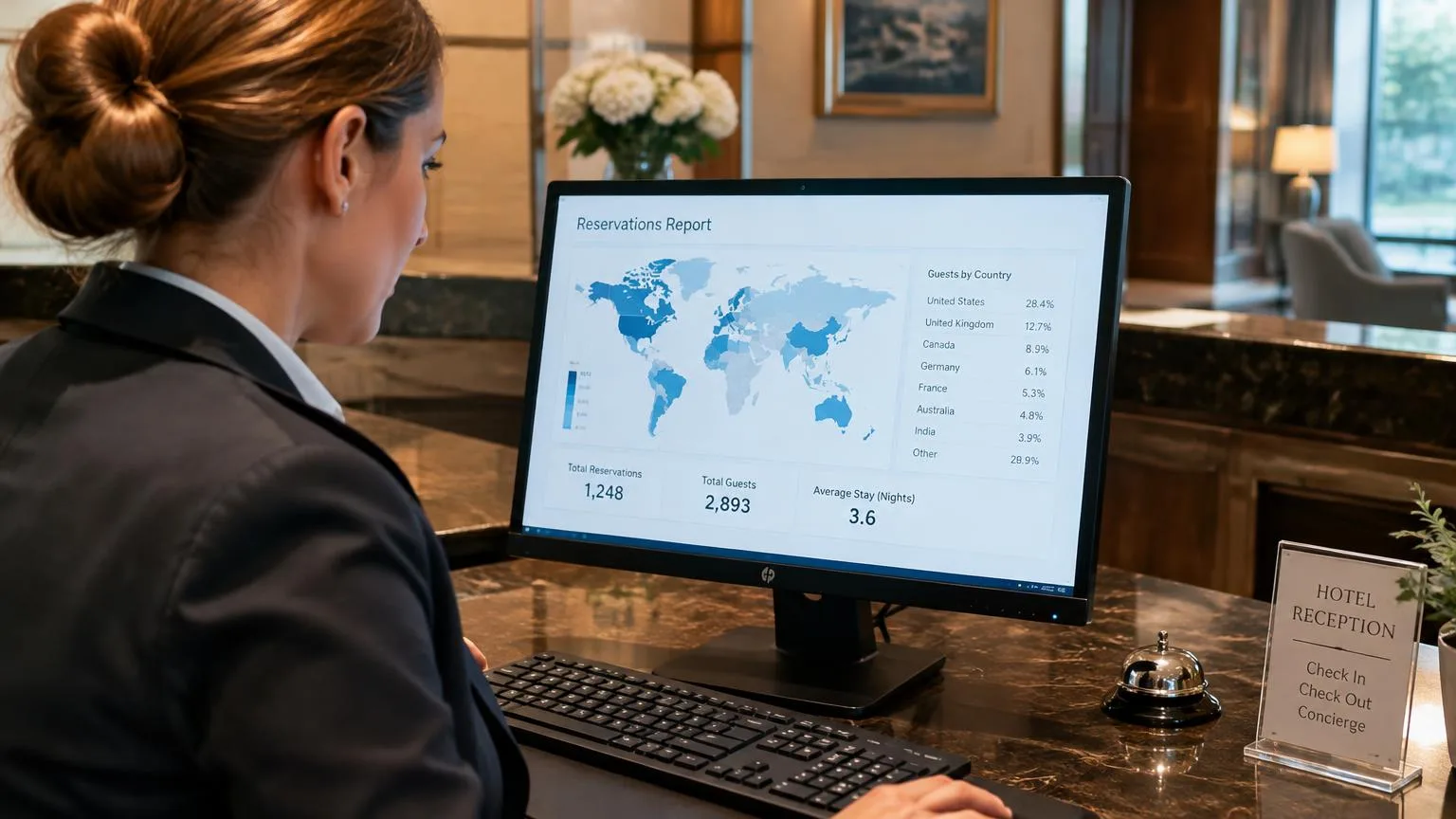
Start with international audiences that already show interest in your hotel. Existing reservations, inquiries, search traffic, and guest feedback can help you choose a target audience before investing in additional language versions.
Look for patterns across these sources:
- Existing bookings: Which countries do your guests come from? Look for consistent demand across seasons rather than relying on one busy month.
- Guest inquiries: Which languages appear in emails, contact forms, and booking questions? Repeated questions can also reveal information your website is missing.
- Search traffic: Which countries generate website traffic from organic search, and which pages attract those travelers?
- Guest feedback: Review online reviews and conversations with your front desk team. Do guests mention difficulty understanding room options, arrival directions, or policies?
Consider these signals together. Regular bookings from Germany, German-language inquiries, and search interest from that country could make German content worth prioritizing.
Country and language are separate decisions. A Spanish-language version can serve travelers from Mexico, Colombia, and Spain, while travelers within one country may prefer different languages. Don't assume a guest's preferred language from their country alone.
Google distinguishes between multilingual websites, which offer content in more than one language, and multi-regional websites, which explicitly target people in different countries. Your hotel doesn't automatically need a separate website version for every country you want to reach.
Pro tip: Begin with the languages your audience needs, then consider country-specific versions when there's a clear reason to provide different content.
Once you've identified your priority audiences, explore how hotels can market to international guests online for ways to reach them beyond search.
How International SEO Could Work for a New York Hotel
Imagine one hotel in New York City attracting interest from travelers in the UK, Germany, and Mexico. The following fictional potential guests show how country, preferred language, and trip priorities can guide what you include on your website.
Sarah: A UK Family Traveler Searching in English
Sarah is planning a New York vacation with her partner and two children. She searches for "family hotel in New York City" to compare room options and find a location that works for their sightseeing plans.
Your English room pages can answer her first questions: Which beds are provided? What's the maximum occupancy? Can the whole family stay in one hotel room? Your location page can then explain how to reach local attractions, with accurate distances and transportation details.
Sarah is an international traveler even though she searches in English. Your existing English content may already serve her well if it gives her enough detail to evaluate the stay.
Lukas: A German Business Traveler Searching in German
Lukas is visiting New York for work and prefers researching accommodation in German. He searches for "Hotel in New York für Geschäftsreisende" ("hotel in New York for business travelers").
German-language keyword research can help you assess this wording and discover related searches worth addressing. Your German location, room, and amenity pages can then explain how to reach the meeting area, whether Wi-Fi is available, and what workspace the rooms provide.
Keep those descriptions specific to your actual facilities. If rooms have a desk, describe it accurately. If they don't, don't imply that every room has a dedicated workspace.
Camila: A Mexican Leisure Traveler Searching in Spanish
Camila is planning a New York vacation with her partner. She searches for "hotel en Nueva York" and wants to understand the rooms, arrival options, payment methods, additional fees, and cancellation terms before completing an online booking.
Spanish location, room, and policy pages give her a way to review those details in her preferred language. Clear navigation matters throughout: from a Spanish room page, she should be able to follow links to Spanish arrival information and cancellation policies.
Those pages could also serve Spanish-speaking travelers from other countries. Their usefulness depends on clear, accurate information that answers guests' questions, rather than a separate version for every nationality.
How Do You Match Your Pages to International Guest Searches?
Match your pages to international searches by researching how guests describe the stay they want, then choosing the page that best answers each search. Once you've identified your priority audiences, you can build a keyword strategy around their language, destination, and trip requirements.
Research How Guests Search in Each Language
Research each language separately rather than simply translating your English keyword list. Travelers may use different destination names, phrases, or ways of describing the same room or amenity.
Look at three aspects:
- Actual wording: How do travelers describe the accommodation they need, such as family rooms or hotels with a workspace?
- Destination terms: Do they use "New York" or "Nueva York"? Which neighborhood names and landmarks appear in their searches? These location-based keywords can help you decide which places your location content should explain.
- Trip requirements: Searches such as "pet friendly hotels in New York" or "affordable hotels near Central Park" reveal specific needs. Target those searches only when your property and its location support the description.
Keyword research tools can help you compare wording, estimated search volume, and related search queries in each market. Review the results with someone fluent in the language, and consider search intent: does the traveler want destination advice, a list of hotels to compare, or a particular room type?
For more context, read our guide on how travelers search for destinations and experiences online.
Choose the Pages That Answer Those Searches
Assign your target keywords to pages that provide the information the traveler is looking for. A general homepage won't always be the most useful place to send someone with a specific question.
Depending on the search, prioritize:
- Room pages: Explain room types, bed arrangements, occupancy, and features for searches about a particular stay.
- Location pages: Answer questions about neighborhoods, airport transportation, transit, and nearby attractions.
- Amenity pages: Describe facilities such as breakfast, parking, or workspaces, including costs and restrictions where relevant.
- Destination pages: Offer practical guidance for travelers researching sightseeing, activities, or itineraries near your hotel.
You don't need a separate page for every phrase. Closely related searches can often be answered on one useful page. Start with relevant keywords and pages that support a booking decision, then expand your translated content as you learn more about demand.
The goal is targeted traffic: visits from travelers whose needs your hotel can meet.
How Do You Make Your Content Useful in Each Language?

Use your search research to decide what guests need to know, then publish that information in clear, natural language. A translated page should answer their questions with the same care and detail as your original content.
Translate and Adapt the Information Guests Need
Localization means adapting wording and explanations for your intended audience while keeping your hotel's information accurate. A translation can be grammatically correct and still leave a guest unsure about what's included or how a policy applies.
Prioritize the details people need to evaluate their stay:
- Room descriptions: Explain bed types, room size, maximum occupancy, and room features. Pair the descriptions with high-quality images that accurately show the space.
- Amenities: State what's included, what costs extra, and any hours or restrictions.
- Location details: Give practical directions from airports or train stations, explain transportation options, and identify the correct hotel entrance.
- Important policies: Clearly explain check-in and check-out times, deposits, cancellation terms, and any conditions attached to a rate.
Pay particular attention to details that can be interpreted differently across countries. Write "June 7" instead of "06/07," identify the currency used for prices and fees, and explain accepted payment methods. If reception closes at night, tell guests how to arrange a late arrival.
Have someone fluent in the language review the wording, and your hotel team confirms the facts. Keep translations updated when facilities or policies change, and use consistent names for your hotel brand and room categories so guests can recognize them throughout the website.
Keep Your Page Content and Navigation Clear
Localize the whole page, including the elements website visitors use to understand it and decide where to go next:
- Page titles and meta descriptions: Clearly describe the page in the same language as its content.
- Headings and descriptions: Use familiar wording so guests can quickly find room details, amenities, and policies.
- Navigation and buttons: Translate menu labels and actions such as checking availability or viewing room options.
- Links between related pages: Keep guests in their chosen language as they explore room options, arrival information, and booking terms. Check for broken links after publishing or updating pages.
Test the journey yourself. Can someone read a translated room page, check its cancellation terms, and continue to the booking engine without an unexpected language change? If the booking engine doesn't support that language, make its available language options clear before guests continue.
How Do Search Engines Find the Right Language Version?
Search engines need to discover your translated pages and understand how the versions relate. This part of technical SEO gives each version an accessible address and identifies the equivalent pages available in other languages.
Give Each Language Version a Clear URL
Google recommends using separate URLs for each language version instead of changing the language at one address based on cookies or browser settings.
Language folders are one straightforward option:
- English:example.com/en/rooms/family-room/
- German:example.com/de/rooms/family-room/
- Spanish:example.com/es/rooms/family-room/
Each page should be accessible to search engines without requiring a login or a guest to select a language first. Add visible language-switching links that take visitors to the equivalent page, so someone viewing a family room doesn't have to start again at the homepage.
Let guests choose their preferred version. Avoid automatically redirecting them based on their location or browser language, which can prevent guests and search engines from accessing other versions. A German-speaking guest researching your hotel while in New York may still prefer German content.
Test each version on mobile devices, including menus, language controls, and booking buttons. Check page speed too: translated pages should load promptly and remain easy to use on a phone.
Connect Equivalent Pages With Hreflang
Hreflang is an annotation that identifies equivalent language or regional versions of a page. It helps Google select an appropriate version for a searcher.
For example, your English family room page can identify its German and Spanish equivalents using the language codes en, de, and es. Each of those pages should reference itself and the other two versions, with matching annotations across all three.
Connect pages that cover the same room or topic. The German family room page should correspond to the English family room page, rather than the English homepage or a general list of rooms.
Your developer can implement and check these annotations. Hreflang doesn't guarantee that a page will appear in search: every language version still needs content search engines can access and information guests find useful.
How Can You Tell Whether International SEO Is Working?
Look for progress in both search visibility and booking activity. Google Search Console shows how travelers find your pages, while website analytics and booking reports help you assess what happens after they visit.
In Search Console's performance report, review results by query, page, and country. Start with two metrics:
- Impressions: How often your pages appear in search engine results.
- Clicks: How often someone follows a search-result link to your website.
Search engine rankings provide additional context, but assess them alongside clicks, inquiries, and reservations. A higher position alone doesn't tell you if you're reaching guests who are interested in booking.
For example, filter pages whose URLs contain /de/ to review your German content, then check which searches and countries generate clicks. Review language versions and countries separately: German pages may attract travelers in several countries.
Next, use Google Analytics and your booking reports to assess inquiries and hotel bookings associated with organic traffic. Useful key performance indicators include completed inquiry forms, visits to the booking engine, and confirmed reservations, provided those actions are tracked correctly. If your booking engine runs on a separate domain, ask your developer or provider to check that tracking continues across both sites.
If German pages gain clicks but booking activity remains low, review the content and the steps that follow. Are guests finding the room details they searched for? Can they understand the booking engine? Are rates, fees, and cancellation terms clear? Low booking activity could also reflect incomplete tracking, so check the measurement before drawing conclusions.
Compare similar seasonal periods where possible, and assess trends over time. For more guidance on choosing useful measures, read our guide on what metrics hotels should track in digital marketing.
When Should You Get Expert Help With International Hotel SEO?
You can handle the first steps yourself: review where your guests come from, improve the information they need before booking, translate your most useful pages, and test each language version, from navigation to the reservation process.
Expert support becomes valuable when you need to choose which markets to prioritize, manage content in several languages, or fix technical issues like language URLs and hreflang. A specialist can also review performance over time and show you where to focus your SEO efforts next.
At Nativo, we can help you plan these improvements around your hotel business, priority audiences, and direct-booking goals. If you're ready to make your website more useful to guests abroad,contact Nativo today to discuss your next steps.
FAQs
Can automated translation tools help with international hotel SEO?
Yes, automated translation tools can provide a starting draft. Before publishing, have a fluent speaker review the wording, and your hotel team verify room details, fees, policies, and booking instructions.
Do links from international travel websites help my hotel’s SEO?
Yes, links from relevant, reputable travel websites can help travelers and search engines discover your hotel. Focus link building on useful coverage and genuine partnerships rather than buying irrelevant links to influence rankings.
Should my hotel optimize for search engines other than Google?
Yes, if your target guests use other search engines. Review search behavior and referral traffic in your priority markets before investing additional time.
Does the country where my website is hosted affect its search visibility?
Server location can provide a geographic signal, but it doesn't determine which countries your hotel can reach. Prioritize reliable hosting, fast pages, and properly configured language versions.
Can international SEO help my hotel appear in AI travel recommendations?
International SEO can make your hotel's information easier to discover in different languages, but it doesn't guarantee inclusion in AI recommendations. Keep your content accurate and accessible; see our guide to Answer Engine Optimization for Tourism for more context.